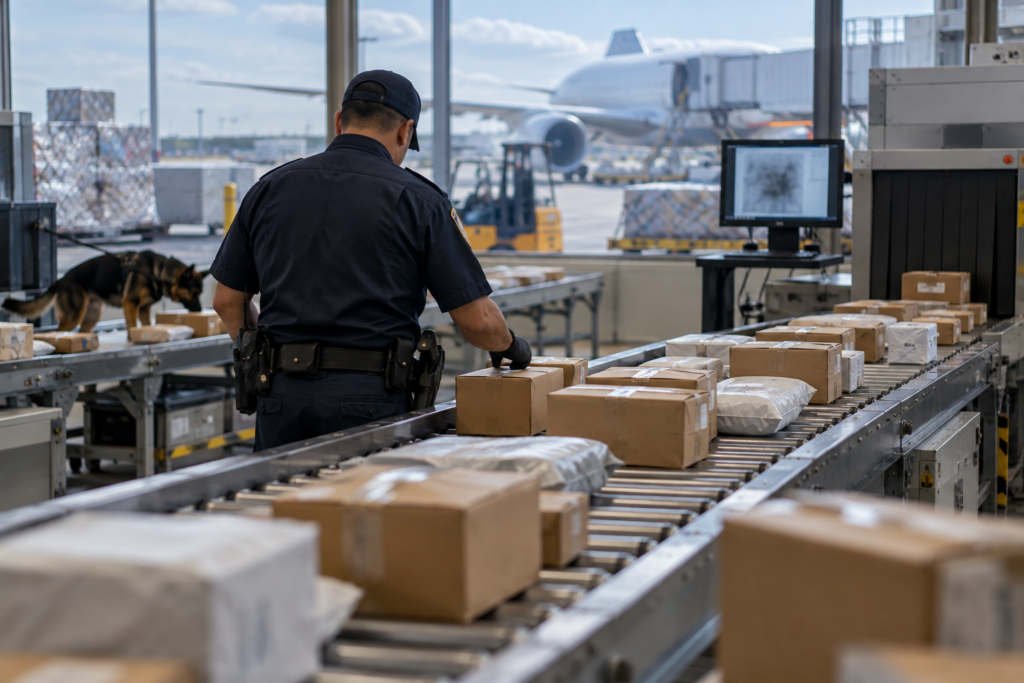
U.S. Customs and Border Protection (CBP) has proposed significant new filing, data, and bonding requirements for imported merchandise valued at $2,500 or less. The proposed rule was published in the Federal Register on October 8, 2026.
The proposal would affect e-commerce sellers, customs brokers, express carriers, carriers transporting international mail, fulfillment providers, and other businesses involved in low-value shipments. It would also make a new electronic entry process, Entry Type 13, mandatory for qualifying merchandise arriving through international mail.
The changes are not yet effective. CBP is accepting comments on the proposed rule through December 7, 2026, under docket number USCBP-2026-0298.
Why CBP Is Acting Now
Duty-free de minimis treatment has been suspended for imports from all countries since August 29, 2025, and the One Big Beautiful Bill Act terminates the exemption by statute effective July 1, 2027. Shipments that once moved under de minimis are now flowing into informal entry instead. CBP counted roughly 52.5 million Entry Type 11 informal entries between September 2025 and May 2026, and says that volume makes it difficult to target unsafe, counterfeit, and illicit goods.
CBP has designated the proposal as economically significant and estimates its net cost at about $9.3 billion over 2026 through 2035 (at a 3% discount rate).
Informal Entries Would Have to Be Filed Earlier and Electronically
Today, an informal entry may be made up to 15 calendar days after merchandise arrives. Under the proposal, merchandise valued at $2,500 or less and eligible for informal entry would require an Entry Type 11 filing submitted electronically in the Automated Commercial Environment (ACE) upon or before the date of importation. Paper filing would no longer be permitted.
Entry Type 11 is already the standard informal entry type, and nearly all Type 11 entries are already filed electronically (paper filings were about 0.14% of the total). The bigger operational change is timing. In a CBP sample of Type 11 entries, only 0.4% were filed before the day of arrival; about 27% were filed on the day of arrival and 25% the day after. CBP acknowledges the earlier deadline could carry significant costs, especially for filers who currently build entries from package labels after shipments land.
Shipments would not be released from CBP custody until the entry is filed and a customs bond is on file (see below).
CBP Wants to Know the Final Deliver-To Party
The proposed rule would add a new required data element: the name and address of the final deliver-to party, when that party differs from the ultimate consignee shown on the entry summary (CBP Form 7501). CBP defines this as the final intended recipient of the shipment, as known at the time the entry summary is filed.
This requirement is intended to give CBP visibility into where imported goods are actually headed. The distinction could be important when merchandise moves through:
- E-commerce marketplaces
- Fulfillment centers
- Express consignment facilities
- Consolidators
- Warehouses
- Freight forwarders
- Third-party logistics providers
- Other intermediaries
Businesses may need to determine whether their order, shipping, and entry systems capture the final recipient early enough to support filing at or before arrival, and how that information will be obtained, validated, and transmitted when several parties participate in a transaction.
Brokers Would Serve as Importer of Record for Consignees
The proposal would clarify who may make informal entry. A consignee that is not the owner or purchaser of the goods (such as a freight forwarder, carrier, or postal operator) would have to appoint a licensed customs broker, and that broker would act as the importer of record. In that case, the broker’s bond would be the one obligated. Owners and purchasers could still file for themselves or through a broker they appoint.
Whoever serves as importer of record remains responsible for the accuracy of the entry, so companies should confirm now which party will hold that role for each shipment flow.
Entry Type 13 Would Become Mandatory for International Mail
CBP launched Entry Type 13 as a voluntary test in production on September 22, 2026. The proposed rule would make it the required entry type for mail shipments valued at $2,500 or less that would qualify for Entry Type 11 if shipped another way. It would replace the current postal informal entry process, which relies on a monthly international mail duty worksheet.
An Entry Type 13 filing would require all of the data required for Entry Type 11, including the final deliver-to party, plus:
- The name and address of the shipper or sender
- The Universal Postal Union (UPU) S-10 tracking number assigned by the foreign postal operator
Carriers transporting mail would also have to report that tracking number on their inward manifests, so CBP can match each package to its entry and confirm the entry was filed on time.
Mail shipments that are not properly entered within 15 days of importation would be deemed voluntarily abandoned and handled by the U.S. Postal Service, which may destroy them or return them to the sender.
Every Informal Entry Would Need a Customs Bond
CBP is proposing that all Entry Type 11 and Entry Type 13 filers obtain a basic importation and entry bond, either a continuous bond or a single transaction bond. A bond is already required under the current postal informal entry process, so the change mainly affects Type 11 entries. CBP estimates about 2.3 million Type 11 entries (roughly 3% of the annual total) were filed without a bond between August 2025 and July 2026.
The proposal would also set a $1,000 minimum for liquidated damages on each breach of a covered bond condition for informal entries. Damages would be the greater of $1,000 or the value of the merchandise (or three times the value for restricted or prohibited merchandise and alcoholic beverages).
Importers should review:
- Whether their shipments are currently entered without a bond
- Whether an existing continuous bond would cover the activity and remain sufficient
- Which party would serve as the importer of record
- How duties, fees, liquidated damages, and redelivery liability would be allocated among parties
CBP Could Require Formal Entry on a Blanket Basis
CBP can already require formal entry for any shipment when necessary for admissibility, revenue protection, or the efficient conduct of customs business. The proposal would broaden that authority so CBP could require formal entry for any reason it deems appropriate, including on a blanket basis for a specific importer of record, specific types or categories of merchandise, or merchandise from a specific manufacturer or seller, rather than shipment by shipment.
This means a shipment’s value alone would not guarantee informal-entry treatment. Formal entry generally involves additional filing requirements and processing time.
Some Low-Value Goods Would Gain Informal Entry Eligibility
Not every change is a new burden. Today, merchandise classified in Chapter 99, Subchapters III and IV of the HTSUS (such as goods subject to Section 232 duties or quotas) can use informal entry only if valued at $250 or less. The proposal would remove that $250 limit, allowing such goods valued up to $2,500 to be entered informally.
What the Proposal Does Not Do
The proposed rule does not change current filing requirements. CBP must review public comments and publish a final rule before the new requirements take effect, and the final rule could differ from the proposal. No effective date has been set, although CBP’s cost analysis assumes the rule would take effect in 2027.
The proposal also should not be confused with the separate suspension and termination of duty-free de minimis treatment under Section 321 (see our coverage of the trade court decision upholding the de minimis suspension). A shipment may qualify for informal entry even though it does not qualify for duty-free treatment; duties, taxes, and applicable trade-remedy charges still apply. The procedures for bona fide gifts would not change.
What Importers Should Do Now
Companies involved in low-value imports should use the comment period to evaluate how the proposal would affect their operations:
- Identify shipments currently entered informally or through international mail.
- Measure how many Type 11 entries are filed after arrival today, and what it would take to file at or before arrival.
- Confirm which party serves as the importer of record for each shipment flow.
- Determine whether current systems capture the final deliver-to party.
- Review the availability and accuracy of classification, origin, value, and shipper information.
- Confirm bond coverage for all informal entries.
- Map the responsibilities of importers, brokers, carriers, marketplaces, and fulfillment providers.
- Identify technology changes needed to support Entry Types 11 and 13.
- Consider submitting comments by December 7, 2026.
CBP has specifically asked for comment on the cost of the earlier filing deadline, its effect on shipping times by mode of transport, the cost of moving remaining paper filers to electronic filing, the cost to carriers of reporting mail tracking numbers, and the cost of returning undeliverable mail. Comments supported by specific cost, data, and timing information will carry the most weight. Submit comments at Regulations.gov under docket USCBP-2026-0298.
For background on the current mail process, see our earlier article, New CBP Postal Entry Process and Entry Type 13 Test.
ASK Alba™ Contact the Alba team for help assessing the proposal, mapping your informal-entry processes, or preparing comments for CBP. Subscribe to the ASK Alba™ Trade Brief for timely updates on customs requirements, tariffs, and other developments affecting U.S. importers.
References
- U.S. Customs and Border Protection, Low-Value Shipments, Notice of Proposed Rulemaking, 91 FR 64532 (October 8, 2026), FR Doc. 2026-20650.
- Regulations.gov Docket USCBP-2026-0298 (comments, plain-language summary, and supporting documents).
- U.S. Customs and Border Protection, Test of the New Electronic Informal Entry Process for Mail, 91 FR 38007 (June 24, 2026).
- U.S. Customs and Border Protection, Indefinite Suspension of the De Minimis Exemption for Mail Shipments and New Postal Informal Entry Process, 91 FR 37801 (June 24, 2026).
- U.S. Customs and Border Protection, CSMS #69289734: Implementation of Entry Type 13 Test in ACE for U.S. Mail Processing.