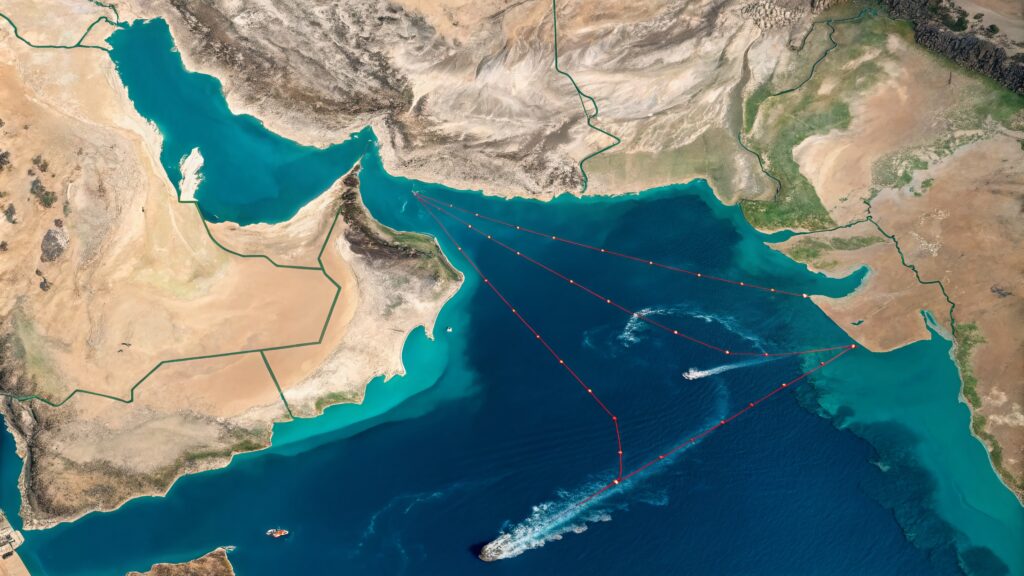
The on-again, off-again crisis in the Strait of Hormuz escalated sharply this week. On July 13, President Trump announced the reinstatement of a U.S. naval blockade on Iranian shipping, effective July 14 at 4:00 p.m. ET. The move follows renewed attacks on commercial vessels by Iran’s Revolutionary Guard and unravels the U.S.-Iran memorandum of understanding signed on June 17, which had briefly reopened the strait and calmed markets. For importers and exporters with cargo moving through the Gulf, or exposure to energy prices anywhere, the implications are immediate.
What the Blockade Covers
According to the U.S. Navy, the blockade encompasses the entire Iranian coastline, including ports and oil terminals, and applies to all vessel traffic regardless of flag. Vessels suspected of entering or departing the blockaded area without authorization are subject to interception, diversion, and capture. Transits through the strait to or from non-Iranian destinations are not supposed to be impeded, and humanitarian shipments may reach Iranian ports subject to inspection. Separately, the President stated the U.S. should be “reimbursed” at a rate of 20% on cargo shipped through the strait in exchange for providing security; a proposal whose mechanics remain unclear and whose legality has been questioned by the UN’s maritime agency and by Secretary of State Rubio.
Market Impact So Far
- Tanker traffic has collapsed. Kpler data showed transits falling from an average of 33 tankers per day to 13 by July 9, and as few as six on some days since, many sailing “dark” with transponders off.
- War-risk insurance has spiked. Hull war-risk premiums for Hormuz transits have risen to roughly 2–6% of vessel value, versus a small fraction of a percent in normal times, and some underwriters are advising owners to pause voyages entirely.
- Carriers are avoiding the region. Major container lines including Maersk, CMA CGM, and Hapag-Lloyd have suspended Gulf transits, and the IMO has advised ships to avoid the strait until crew safety can be assured.
- Oil prices are climbing. Crude jumped roughly 12% to about $86 per barrel on the blockade news, feeding directly into bunker fuel costs and fuel surcharges across all modes.
What This Means for Importers
Expect rate volatility and equipment shortages on Middle East and Asia–Europe lanes, longer transits as carriers reroute, and rising fuel surcharges globally. Shippers with Gulf-origin or Gulf-destined cargo should confirm booking status with carriers now, review force majeure and war-risk clauses in service contracts, budget for elevated insurance and surcharge costs, and build extra lead time into Q3 and Q4 supply plans. Even businesses with no Gulf exposure will feel the energy-price effects if the disruption persists.
How Alba Can Help
Alba is tracking carrier advisories, routing changes, and surcharge announcements daily. If your supply chain touches the region, or you want help modeling fuel and freight cost exposure, contact the Alba team.
Want updates like this in your inbox? Subscribe to the newsletter.
Sources: Axios; U.S. Navy/CENTCOM; CNBC; Bloomberg; Insurance Journal; Al Jazeera; Fortune (July 2026).