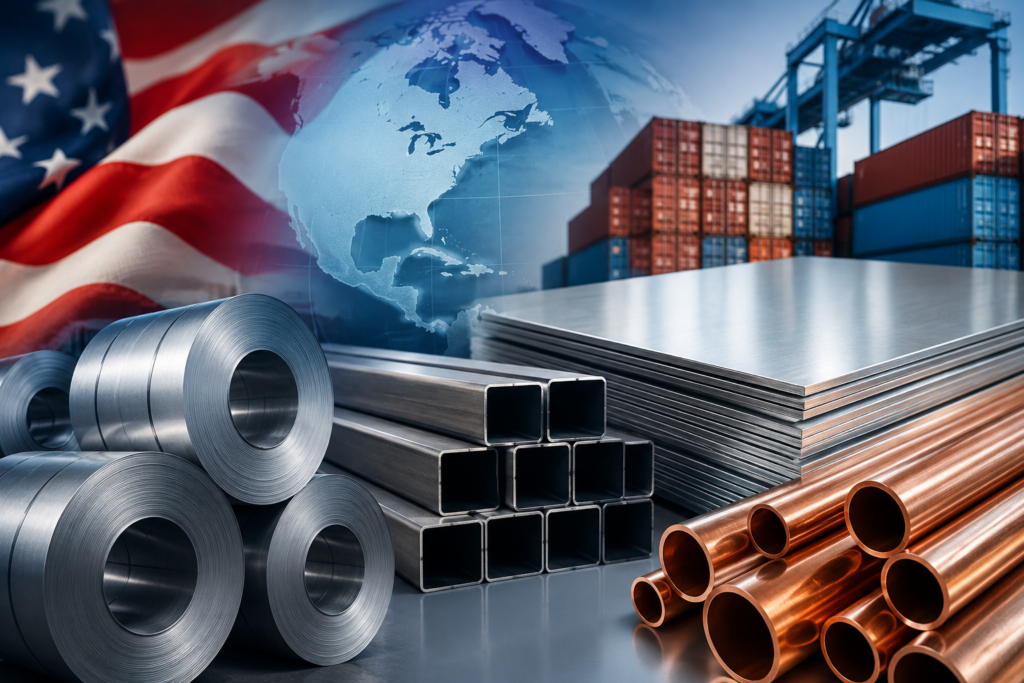
A June 1, 2026, presidential proclamation has introduced several new relief measures under Section 232 for certain steel, aluminum, and copper imports. While the 50% tariff rate on primary articles remains in place, the action establishes new pathways for reduced duty treatment tied to USMCA qualification and domestic content.
New Relief Categories
The proclamation establishes three key relief mechanisms:
USMCA-Qualifying Goods
Certain products imported from Canada and Mexico may now qualify for reduced Section 232 rates when the applicable USMCA rules of origin are satisfied. Importers should review origin documentation and ensure supporting records are available to substantiate eligibility.
Domestic Content Incentives
Derivative imports containing substantial U.S. content may also qualify for reduced duty treatment. Specifically, products manufactured using:
- At least 85% U.S.-melted-and-poured steel; or
- At least 85% U.S.-smelted aluminum or copper
may be eligible for relief under the revised framework.
Agricultural and Industrial Equipment Relief
The proclamation also provides temporary relief through December 31, 2027, for certain agricultural and industrial equipment imported from countries covered by bilateral trade arrangements.
What Has Not Changed
The June 1 action does not eliminate Section 232 tariffs. The 50% base rate on primary steel, aluminum, and copper articles remains in effect, and the full-value assessment methodology implemented on April 6, 2026, continues to apply.
What Importers Should Consider
Companies importing products subject to Section 232 should review:
- USMCA origin qualification for Canadian and Mexican goods.
- Supply chains involving derivative steel, aluminum, and copper products.
- Domestic content calculations supporting the 85% thresholds.
- Eligibility for agricultural and industrial equipment relief.
These changes may create opportunities for reduced duty exposure, particularly for manufacturers and importers with North American supply chains.
Ask Alba™
Navigating evolving Section 232 requirements can be complex. Alba’s trade professionals help importers evaluate tariff exposure, review origin documentation, and identify opportunities to maximize available duty relief.
Answers. Solutions. Knowledge.
Contact us to learn how Alba can help your business manage changing trade requirements.
Sources
White House – Further Adjusting the Tariff Regimes for Imports of Aluminum, Steel, and Copper Into the United States
https://www.whitehouse.gov/presidential-actions/2026/06/further-adjusting-the-tariff-regimes-for-imports-of-aluminum-steel-and-copper-into-the-united-states/