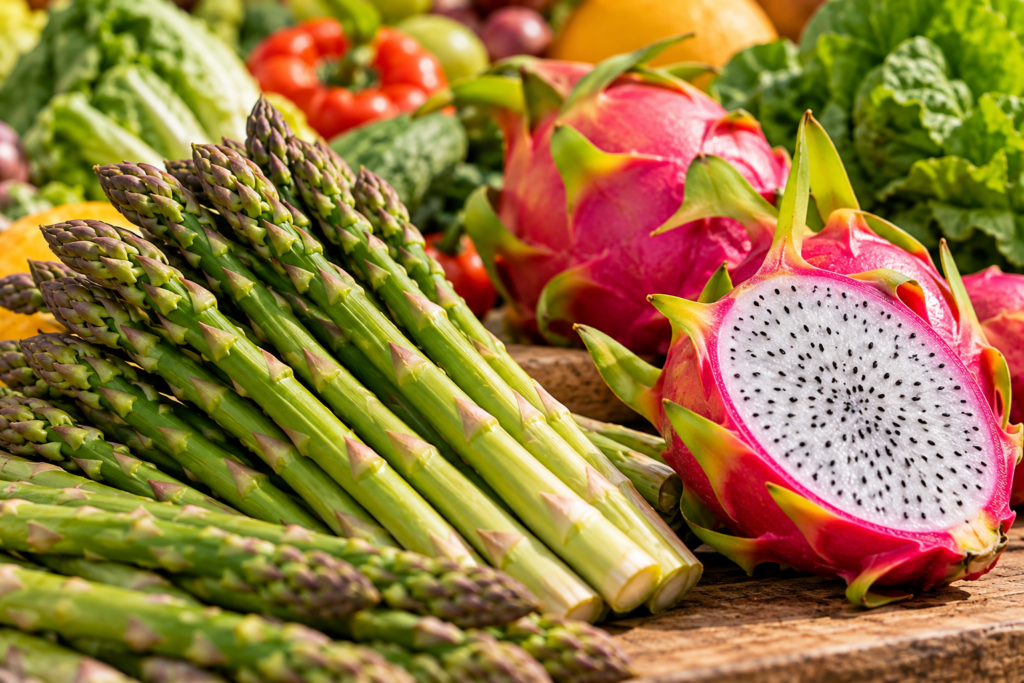
A delegation from the USDA Animal and Plant Health Inspection Service (APHIS) has completed a technical visit to Peru, where it reviewed how Peru’s National Agricultural Health Service (SENASA) certifies and inspects agricultural exports bound for the United States. The visit is the latest step in Peru’s long-running effort to ease entry conditions for fresh asparagus and to open the U.S. market to several products that cannot be imported today.
Nothing changes for U.S. importers yet. But for companies sourcing Peruvian produce, the visit signals which products are moving through the approval pipeline and where future sourcing options could open up.
What Happened During the Visit
According to SENASA, the APHIS team toured asparagus, blueberry, and grape production sites in the Ica region, a major export hub on Peru’s southern coast. There, the delegation observed:
- Integrated pest management practices in the field
- Procedures SENASA uses to certify production sites for export
- Packing plant operations
- Pest mitigation measures and the phytosanitary (plant health) inspections SENASA performs before shipment
The visit wrapped up with a technical meeting at SENASA headquarters in Lima, led by SENASA chief Vilma Gutarra, covering priority issues in U.S.-Peru agricultural trade.
Products Under Negotiation
Beyond the crops toured in Ica, the two agencies discussed pending market access requests for products Peru does not currently ship to the U.S. mainland, or ships only under limited conditions:
- Dragon fruit (known in Peru as pitahaya)
- Non-Hass avocado varieties (Peruvian Hass avocados already have U.S. access; other varieties do not)
- Goldenberry (aguaymanto, also sold as cape gooseberry or physalis)
- Turmeric
- Citrus to Puerto Rico (a separate request covering shipments to the territory)
Several of these requests have been in progress for years. Peruvian officials said in 2025 that APHIS had concluded its risk analysis for goldenberry, which would make it one of the nearer-term candidates. Peruvian industry groups have described dragon fruit as further back in APHIS’s queue, behind asparagus, goldenberry, and avocado.
The Asparagus Question
Asparagus was a central focus of the talks. Peru shipped 31,928 metric tons of asparagus for export in 2025 to 38 markets, with the United States as its largest destination, according to SENASA figures reported by Peruvian business daily Gestión.
Peruvian asparagus currently enters the U.S. subject to mandatory methyl bromide fumigation, a treatment that kills pests but can shorten shelf life and adds cost. Peru has pushed for years to replace fumigation with a “systems approach,” meaning a set of layered controls (field pest management, certified production sites, packing house safeguards, and inspections) that together reduce pest risk without a single end-of-line treatment. APHIS previously drafted a pest risk assessment for Peruvian asparagus under a systems approach, and SENASA said during this visit that the two agencies are evaluating risk mitigation alternatives that would improve current procedures while maintaining U.S. plant health protections.
What This Means for Importers
A technical visit is an evaluation step, not an approval. Before any new product can enter, or any existing import condition can change, APHIS generally completes a pest risk analysis and then publishes a notice or rule in the Federal Register, often with a public comment period. Until that happens, current requirements stay in place.
For importers of Peruvian asparagus, that means fumigation requirements at entry still apply. For importers interested in dragon fruit, non-Hass avocados, goldenberries, or turmeric from Peru, these products remain subject to existing restrictions until APHIS formally authorizes them.
Action Items
- Confirm current entry requirements for any Peruvian produce you import using the APHIS Agricultural Commodity Import Requirements (ACIR) database before booking shipments.
- Continue to plan for fumigation costs, timing, and shelf-life impact on Peruvian asparagus; no change has been announced.
- Watch the Federal Register for APHIS notices on Peruvian asparagus, dragon fruit, goldenberry, non-Hass avocado, and turmeric, and consider submitting comments if a proposal affects your supply chain.
- If you are exploring new Peruvian product lines, talk with your suppliers now about SENASA production site registration, since approved products typically require shipments to come from registered sites.
- Shipping to Puerto Rico? Track the citrus access request separately from mainland rules.
ASK Alba™ Importing fresh produce from Peru or elsewhere in Latin America? Alba’s team can help you confirm APHIS entry requirements, coordinate phytosanitary documentation, and keep shipments moving at the border. Contact us today.
References
- Gestión: Estos son los cultivos de Perú que “calientan motores” para entrar a Estados Unidos (Oct. 26, 2026)
- Logística 360: Perú y Estados Unidos evalúan mejoras fitosanitarias para el espárrago (Oct. 26, 2026)
- AgroPerú: Senasa y EE. UU. fortalecen cooperación sanitaria para impulsar las agroexportaciones peruanas
- Sandler, Travis & Rosenberg: Imports of Asparagus from Peru Under Review
- The Packer: USDA seeks comment on draft pest risk assessment for imports of asparagus from Peru
- Agraria.pe: Senasa: aguaymanto peruano próximo a ingresar en Estados Unidos
- USDA APHIS: Agricultural Commodity Import Requirements (ACIR) database