October 2026 Update: USDA Proposes Import Certificate Clarification
USDA’s National Organic Program has proposed a clarification to the NOP Import Certificate as part of its latest information-collection review. Under the proposal, Item 7 would change from “Recipient in the U.S.” to “Certified Organic Importer in the U.S. (Name and Address).”
USDA says the revision is intended to clarify which party should be identified and help reduce erroneous and duplicate submissions. The notice does not change current organic regulations or importer requirements, but it reinforces the importance of accurately identifying the certified organic importer on NOP documentation.
Learn more.
Public comments are due November 24, 2026.
USDA’s National Organic Program (NOP) is tightening the net on organic fraud at U.S. ports of entry, coordinating more closely with U.S. Customs and Border Protection (CBP), state partners, and organic certifiers to catch fraudulent or noncompliant shipments before they reach the marketplace. For importers of organic products, the message is clear: documentation and certification gaps that once slipped through are now being flagged before goods clear customs.
How NOP Intercepts Risky Shipments
NOP uses a layered set of enforcement tools to identify problems at the border, drawing on Import Certificate data and targeted sampling to flag high-risk shipments before they enter organic commerce. Its toolkit includes:
- CBP seizures and denials of entry for products misusing or counterfeiting the USDA Organic seal
- Sampling and testing of high-risk imports to detect prohibited substances
- Identification of incomplete or fraudulent documentation, referred for investigation
- Proactive review of NOP Import Certificate (NOP-IC) data to flag suspicious shipments and open surveillance
- Adverse actions and stronger oversight requirements for certifiers that fail to catch fraud
On the Front Lines: The Port of Long Beach Case
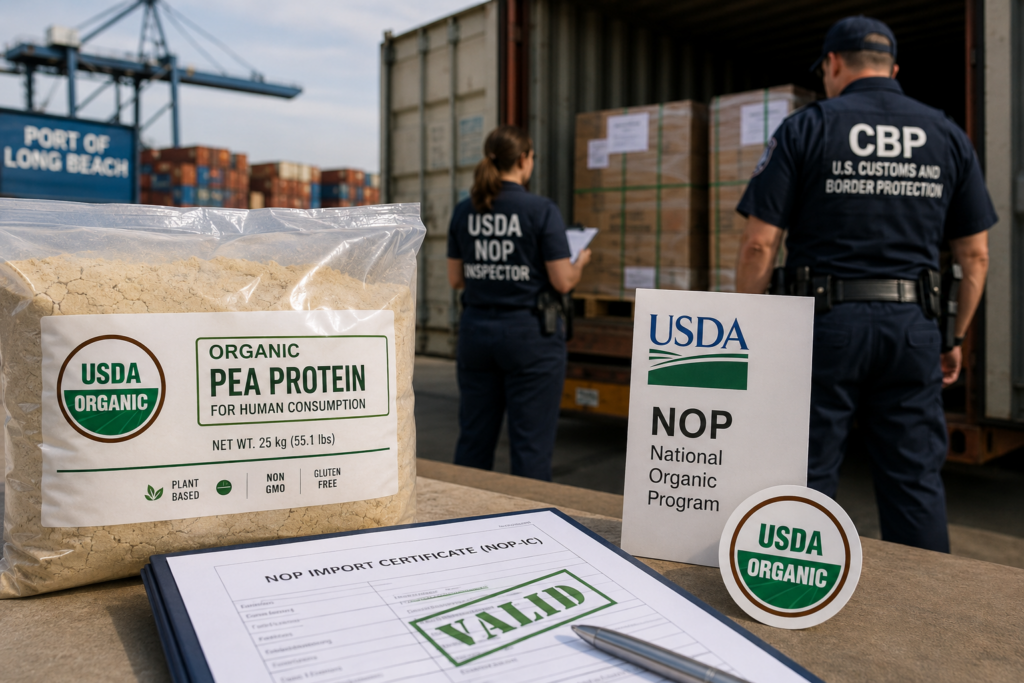
A recent case illustrates how these tools work together. At the Port of Long Beach, NOP and CBP ran targeted sampling on organic-labeled pea protein intended for human consumption, a product category flagged as high-risk due to known fraud patterns in global supply chains.
Testing and document review uncovered violations in two separate shipments. One carried the USDA Organic seal but lacked both a certified NOP importer and a valid NOP-IC, meaning it could not legally be sold as organic in the United States. A second shipment tested positive for a prohibited substance, making it ineligible for organic sale as well.
NOP authorized CBP to detain and deny entry to both shipments, blocking more than 21 tons of fraudulent pea protein from entering the organic market. NOP then suspended the exporter’s organic certification, and certifiers tied to the supply chain increased sampling, supplier verification, and monitoring as a result.
Complaint Trends Shaping Enforcement Priorities
NOP received 755 complaints in 2025, and the patterns in those complaints are helping direct where enforcement resources go. Common complaint types include:
- Certified operations that failed to correct a noncompliance, or showed evidence of fraud (such as selling more product as organic than they could produce)
- Uncertified businesses making organic claims on websites or social media
- Uncertified businesses labeling products as organic
- Uncertified businesses selling organic-labeled products through third-party online retailers
NOP’s first response to a confirmed violation is to bring the operation back into compliance or remove it from the organic market, whether through suspension, revocation, or negotiated surrender. Other outcomes can include warning notices, civil penalties, posting fraudulent certificates to NOP’s Organic Enforcement Activity webpage, and referrals to other federal, state, or law enforcement agencies.
What This Means for Importers
Importers remain a key checkpoint in protecting organic supply chains, and NOP’s enforcement posture puts a premium on having documentation in order before goods arrive at the border. Steps worth reviewing now:
- Confirm your organic certification is current and that you’re listed as a certified importer for any organic shipments you bring in
- Verify every shipment has a valid NOP Import Certificate (NOP-IC) before it reaches port
- Keep your required Fraud Prevention Plan current and treat it as an active compliance tool, not a filing exercise
- Vet suppliers and exporters for organic certification status, particularly for high-risk categories like protein ingredients
- Check the NOP Organic Enforcement Activity webpage periodically for fraudulent certificates or settlement actions involving your supply chain
ASK ALBA™
Importing organic products? Alba’s Trade Advisory Services team can help you review your NOP Import Certificate documentation, Fraud Prevention Plan, and certification status before your next shipment reaches the border.
Contact Alba to speak with a trade compliance expert
References
USDA AMS National Organic Program – Organic Insider: Oversight and Enforcement Update