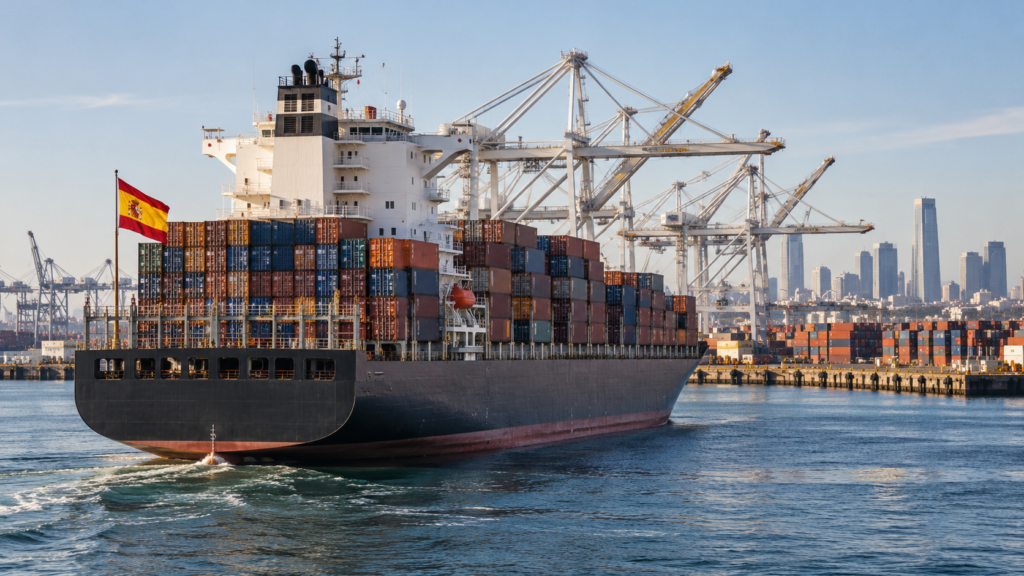
The Federal Maritime Commission has proposed a $200,000 fee on Spanish-flagged vessels entering U.S. ports and potential restrictions on imports of several major categories of Spanish goods.
The proposed remedies respond to the FMC’s finding that Spain created conditions unfavorable to U.S. foreign trade by denying certain U.S.-flagged vessels access to Spanish ports.
The proposal has not taken effect. Comments are due December 14, 2026.
Why Is the FMC Proposing These Measures?
The FMC opened an investigation after Spain refused port access to vessels participating in the U.S. Maritime Security Program.
According to the Commission, Spain prevented at least three U.S.-flagged vessels from docking in November 2024. The affected vessels were reportedly carrying cargo bound for or coming from Israel.
The FMC concluded that Spain’s actions impaired the ability of U.S.-flagged vessels to participate in trade involving Spanish ports and forced carriers to reroute calls to other locations, including Tangier, Morocco.
The Commission has authority to address foreign-government practices that create unfavorable shipping conditions or impair U.S.-flagged vessels’ access to international ocean trade.
Proposed $200,000 Fee on Spanish Vessels
The FMC proposes charging a $200,000 fee each time a Spanish-flagged vessel enters a U.S. port from a foreign port or location.
If a vessel fails to pay the fee, the FMC could request that the Department of Homeland Security:
- Refuse clearance to the vessel
- Deny the vessel entry for oceanborne trade
- Detain the vessel at a U.S. port
- Take action against another designated Spanish vessel
The fee would apply based on the vessel’s Spanish registration, not merely because the cargo originated in Spain.
Which Spanish Goods Could Be Restricted?
The proposal would authorize restrictions covering Spanish goods classified in five HTSUS chapters:
- Chapter 33: Essential oils, perfumes, cosmetics and toilet preparations
- Chapter 15: Animal, vegetable or microbial fats and oils, including olive oil
- Chapter 69: Ceramic products, including ceramic tiles
- Chapter 68: Articles of stone, plaster, cement, asbestos, mica and similar materials
- Chapter 17: Sugar and confectionery products
These are broad tariff chapters rather than a short list of individual products.
The FMC estimates that the affected categories represent significant U.S. imports from Spain. In 2025, the identified trade included approximately $940 million in perfumes and cosmetics, $1.15 billion in fats and oils and more than $630 million in ceramic products.
The Commission specifically declined to propose restrictions on Spanish retail medicines and static converters or transformers because of public-health considerations and an ongoing U.S. transformer shortage.
Restrictions Could Affect Vessels of Any Flag
The potential enforcement mechanism extends beyond Spanish-flagged vessels.
Under the proposal, if any vessel transports covered Spanish goods to a U.S. port and unloads them, the FMC could ask Homeland Security to refuse clearance until the goods are reloaded. The agency could also request denial of entry or detention of a vessel carrying covered goods.
This means a restriction on Spanish merchandise could affect carriers registered in other countries, as well as importers, NVOCCs, freight forwarders and cargo owners.
Nothing Is Prohibited Yet
The FMC emphasized that the product list and remedies remain proposed.
The Commission could:
- Adopt all proposed restrictions
- Limit only certain product categories
- Impose narrower restrictions
- Select a lesser remedy
- Modify the vessel fee
- Decide not to proceed with some measures
Companies should not cancel shipments or treat Spanish products as prohibited based solely on the proposal.
However, importers with longer production and transportation lead times should evaluate their exposure now. A future restriction could affect purchase orders, contracts and cargo already moving through the supply chain.
What Importers and Logistics Providers Should Do
Companies handling Spanish merchandise should:
- Identify imports classified in HTSUS Chapters 15, 17, 33, 68 and 69.
- Determine whether products are of Spanish origin and exported from Spain.
- Review upcoming purchase orders and shipping schedules.
- Identify the vessels and services commonly used for Spanish shipments.
- Review contracts for government-action, cancellation and additional-cost provisions.
- Determine which party would bear added transportation or rerouting costs.
- Monitor whether the FMC narrows or expands the proposed product list.
- Consider submitting comments before December 14 if the proposal would materially affect operations.
Businesses submitting comments should quantify likely commercial effects, including sourcing limitations, transportation disruptions, customer impacts and the availability of substitute products.
For more information, review the FMC’s proposed rule and request for comments.
Contact the Alba team for assistance reviewing affected classifications, evaluating shipments from Spain or preparing for possible import restrictions.
Subscribe to the ASK Alba™ Trade Brief for timely updates on ocean freight, import restrictions and international trade compliance.