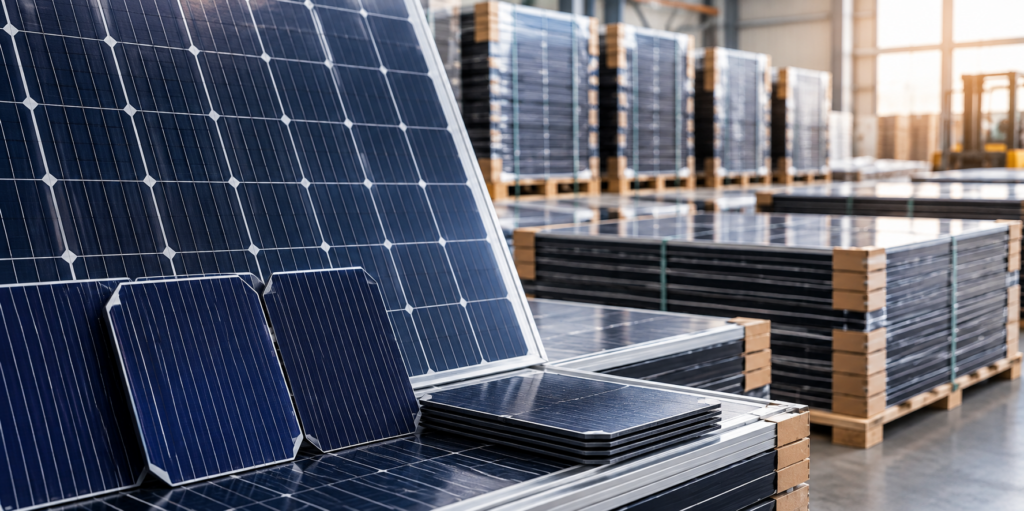
U.S. solar importers face substantial new trade-remedy exposure after the Department of Commerce issued final affirmative antidumping and countervailing duty determinations covering crystalline silicon photovoltaic cells from India, Indonesia and Laos.
The investigations cover photovoltaic cells whether or not they are assembled into modules. Several of the final rates exceed 100%, and combined antidumping and countervailing duty exposure could exceed 200% for certain supplier and country combinations.
The U.S. International Trade Commission must still issue final injury determinations before Commerce can establish antidumping and countervailing duty orders. The ITC’s injury vote is currently scheduled for October 14, 2026. Existing preliminary cash-deposit requirements remain relevant while the investigations continue.
Final Antidumping Duty Rates
Commerce calculated the following final dumping margins and adjusted cash-deposit rates:
India
Commerce assigned a final dumping margin of 123.04% to the examined companies and all other Indian producers and exporters. After adjusting for applicable subsidy offsets, the antidumping cash-deposit rate is 107.17%.
The rate applies to:
- Mundra Solar PV Limited
- Mundra Solar Energy Limited
- Kowa Company Ltd.
- Premier Energies Photovoltaic Private Limited
- All other Indian producers and exporters
Commerce based the rate on facts available with adverse inferences.
Indonesia
Commerce assigned a final antidumping rate of 94.36% to:
- PT Blue Sky Solar Indonesia
- PT REC Solar Energy Indonesia
- All other Indonesian producers and exporters
This rate was also based on facts available with adverse inferences.
Laos
Commerce calculated a final dumping margin of 65.43%. After adjusting for subsidy offsets, the antidumping cash-deposit rate is 65.03%.
The rate applies to specified SolarSpace, JA Solar and Trina Solar producer-exporter combinations, as well as the Laos-wide entity.
Final Countervailing Duty Rates
Commerce also found that solar products from all three countries benefited from countervailable subsidies.
The final subsidy rates are:
- India: 126.09%
- Indonesia: 173.70% for PT Blue Sky Solar Indonesia and 73.20% for PT REC Solar Energy Indonesia and all other producers and exporters
- Laos: 82.03% for Solarspace Technology and all other producers and exporters, and 153.67% for Vietnam Sunergy Joint Stock Company
Importers should not automatically add the published dumping margin and subsidy rate to determine the amount due at entry. Antidumping cash-deposit rates may be adjusted to account for export subsidies, and the correct treatment depends on the producer, exporter, country and current CBP instructions.
The Written Scope Controls
The investigations cover crystalline silicon photovoltaic cells and products containing those cells, including modules, laminates, panels and certain building-integrated materials.
Coverage is determined by the written scope rather than the HTSUS classification alone. Importers should review products completed or assembled in another country carefully because third-country processing may not necessarily remove merchandise from the scope.
This is particularly important for solar supply chains in which cells are manufactured in one country and assembled into modules elsewhere.
The Investigations Are Not Yet Complete
The International Trade Commission must determine whether the U.S. solar industry is materially injured or threatened with material injury by the investigated imports.
If the ITC reaches affirmative final determinations, Commerce will issue antidumping and countervailing duty orders. If the ITC reaches a negative determination for a particular country or investigation, the corresponding proceeding will end and deposits associated with that investigation may be refunded.
Importers should continue monitoring the proceedings rather than treating the final Commerce rates as the last step.
What Solar Importers Should Do Now
Companies importing solar cells or modules from India, Indonesia or Laos should:
- Identify the producer and exporter for every shipment.
- Confirm where the cells were manufactured, not simply where the modules were assembled or exported.
- Review the written scope and any applicable exclusions.
- Verify current antidumping and countervailing duty cash-deposit instructions.
- Model potential combined duty exposure using the adjusted deposit rates.
- Review customs-bond sufficiency and working-capital requirements.
- Revisit contracts, pricing and responsibility for trade-remedy duties.
- Monitor the ITC’s final injury determinations and subsequent CBP instructions.
The final rates could materially affect project costs, financing and supplier viability. Importers should review existing purchase commitments before additional shipments enter the United States.
References
- Commerce Department Final Affirmative Determinations Fact Sheet (trade.gov)
- FAQs for the Final Determination of an Antidumping/Countervailing Duty Investigation (trade.gov)
- USITC Investigation Calendar
- ACCESS: Case Nos. A-533-942/C-533-943 (India), A-560-846/C-560-847 (Indonesia), A-553-003/C-553-004 (Laos)
Contact the Alba team for assistance reviewing product scope, producer-exporter combinations, applicable deposit rates and potential duty exposure.
Subscribe to the ASK Alba™ Trade Brief for timely updates on tariffs, trade remedies and U.S. import compliance. Contact Alba