On August 11, 2026, the U.S. Food and Drug Administration (FDA) released final guidance for manufacturers and processors of ready-to-eat fresh-cut produce. The new guidance replaces FDA’s 2008 fresh-cut produce guidance and reflects public comments received on an October 2018 draft.
The Guide to Minimize Biological Hazards in Ready-to-Eat Fresh-Cut Produce provides recommendations to help covered manufacturers and processors comply with applicable requirements under the FSMA Current Good Manufacturing Practice, Hazard Analysis, and Risk-Based Preventive Controls for Human Food (PCHF) rule. The guidance is nonbinding and represents FDA’s current thinking on preventing biological contamination in fresh-cut produce.
Why Fresh-Cut Produce Requires Added Attention
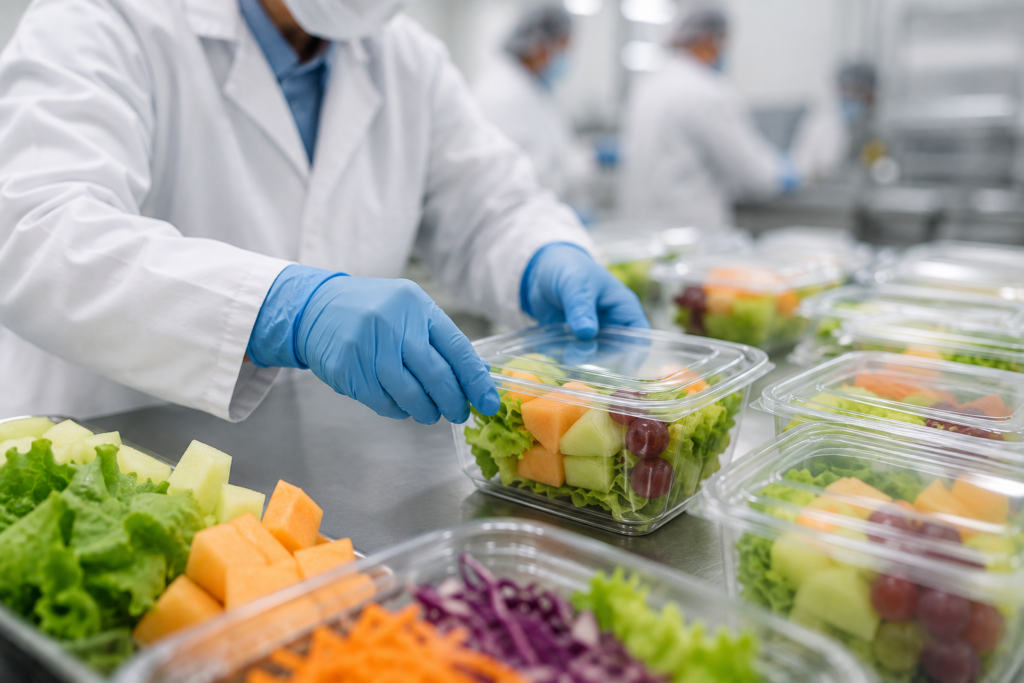
Fresh-cut produce includes fruits and vegetables that have been physically altered from their whole state, such as by chopping, dicing, peeling, or shredding, without additional processing such as freezing or cooking, and are distributed in fresh form. Common examples include chopped lettuce, cut cantaloupe, diced onions, and shredded carrots.
Fresh-cut produce can be particularly susceptible to contamination. Biological hazards may be introduced where produce is grown, during transportation, during manufacturing, when products are commingled, or at retail. The opportunity for contamination can also increase as products move through these different stages of the supply chain.
Unlike foods that undergo further processing to eliminate pathogens, fresh-cut produce does not receive a kill step to eliminate pathogens that may be introduced during these processes, and most products are sold ready-to-eat. As a result, preventing contamination throughout production and handling is particularly important.
What the Guidance Covers
The final guidance provides recommendations and examples for implementing PCHF requirements to protect ready-to-eat fresh-cut produce from biological hazards.
The recommendations are tailored to the unique risks associated with fresh-cut operations and are intended to help manufacturers and processors evaluate their food safety practices and preventive controls.
The guidance does not establish new legally enforceable requirements. Instead, it describes FDA’s current thinking and provides recommendations for industry. FDA also encourages companies to continue developing and implementing best practices tailored to specific commodities and processes.
What Importers Should Do
While the guidance is primarily directed at manufacturers and processors, importers of ready-to-eat fresh-cut produce should consider how the updated recommendations may affect their supplier oversight and food safety programs.
Importers and their foreign suppliers should:
- Review current biological hazard controls against the final guidance, particularly for products that pass through multiple processing, handling, or commingling steps before reaching U.S. consumers.
- Review FSVP documentation and supplier verification activities to determine whether the updated guidance identifies biological hazards or preventive practices that should be considered in existing programs.
- Coordinate with foreign suppliers and processors to identify potential gaps between current practices and FDA’s recommendations for minimizing contamination risk.
- Monitor FDA food safety resources for additional commodity-specific or process-specific best practices that may be developed alongside the guidance.
For importers, the new guidance provides an opportunity to revisit supplier food safety practices and confirm that verification activities remain appropriate for the biological hazards associated with ready-to-eat fresh-cut products.
Have questions about how this guidance could affect your fresh-cut produce imports or FSVP program?
Ask Alba™. Our trade compliance team is here to help. Contact us today.
References
FDA: Guidance for Industry: Guide to Minimize Biological Hazards in Ready-to-Eat Fresh-Cut Produce
Federal Register: Guidance: Guide to Minimize Biological Hazards in Ready-to-Eat Fresh-Cut Produce