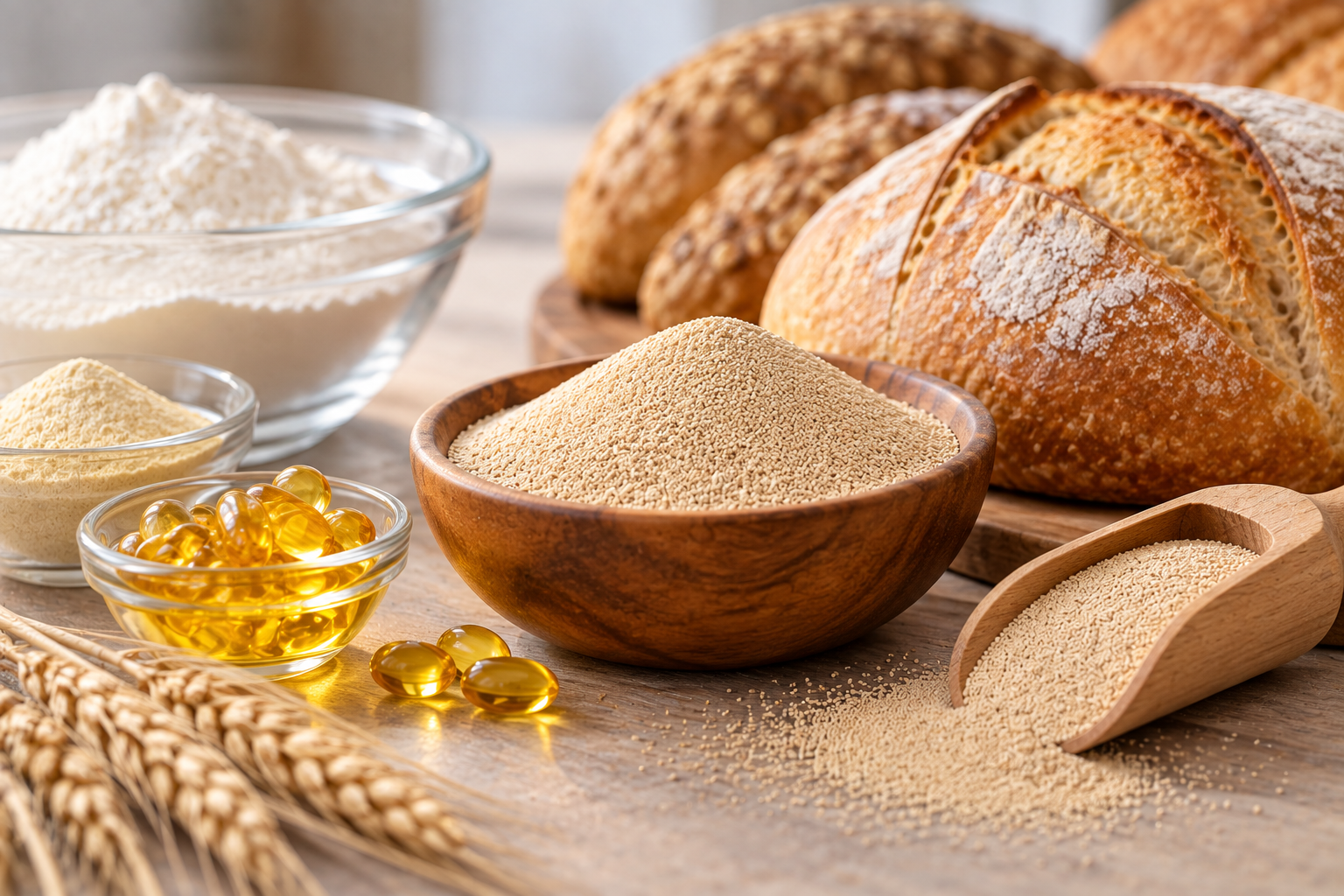
The U.S. Food and Drug Administration (FDA) has amended its food additive regulations to allow vitamin D2 inactive baker’s yeast to be used as a source of vitamin D2 in a range of food categories.
The final rule, published and effective September 25, 2026, adds a new section to FDA’s regulations (21 CFR 172.383). It permits vitamin D2 inactive baker’s yeast in the same food categories, and at the same maximum vitamin D2 levels, already allowed for vitamin D2 mushroom powder under 21 CFR 172.382. The rule responds to a food additive petition filed by Lallemand Inc. (FAP 1A4829).
Until now, FDA regulations allowed vitamin D2 baker’s yeast only in its active form, as a vitamin D2 source and leavening agent in yeast-leavened baked goods, baking mixes, and baked snack foods (21 CFR 172.381). The new rule covers a heat-inactivated form that can be added to many more types of food.
What the Rule Allows
The rule sets maximum vitamin D2 levels for 18 food categories. Examples include:
- Breakfast cereals: up to 350 IU per 100 grams
- Grain products and pastas: up to 90 IU per 100 grams
- Yeast-leavened baked goods: up to 400 IU per 100 grams
The full list, which also covers several beverage and plant-based product categories, appears in paragraph (e) of the new section.
The ingredient itself must also meet specifications, including moisture below 7 percent, negative results for Salmonella, Staphylococcus aureus, E. coli, and Pseudomonas aeruginosa, and limits on lead, arsenic, cadmium, and mercury. Containers of the additive must carry directions for use that keep finished foods within the permitted vitamin D2 levels.
Objections and requests for a hearing on the rule are due by October 26, 2026.
What Food Importers Should Know
The rule does not create a new requirement for food importers. Instead, it expands the vitamin D2 ingredients that may legally be used in certain foods, which may give importers and their suppliers more flexibility when formulating vitamin D2 fortified products.
Importers bringing the ingredient or finished foods containing it into the United States should:
- Confirm the finished food falls within one of the 18 permitted categories.
- Verify vitamin D2 levels do not exceed the maximum for that category.
- Obtain supplier documentation showing the ingredient meets FDA’s specifications.
- Review labels and formulations against other applicable FDA requirements before shipment.
Foods that use the ingredient outside the permitted categories or above the maximum levels could be considered adulterated and refused admission.
ASK Alba™
Contact the Alba team with questions about FDA requirements and importing food products into the United States. Subscribe to the ASK Alba™ Trade Brief for the latest regulatory and trade updates affecting U.S. importers.
References
- Food and Drug Administration, Food Additives Permitted for Direct Addition to Food for Human Consumption; Vitamin D2 Inactive Bakers Yeast, 91 FR 60796 (September 25, 2026)
- Regulations.gov Docket No. FDA-2021-F-1157
- 21 CFR 172.381, Vitamin D2 bakers yeast (eCFR)
- 21 CFR 172.382, Vitamin D2 mushroom powder (eCFR)