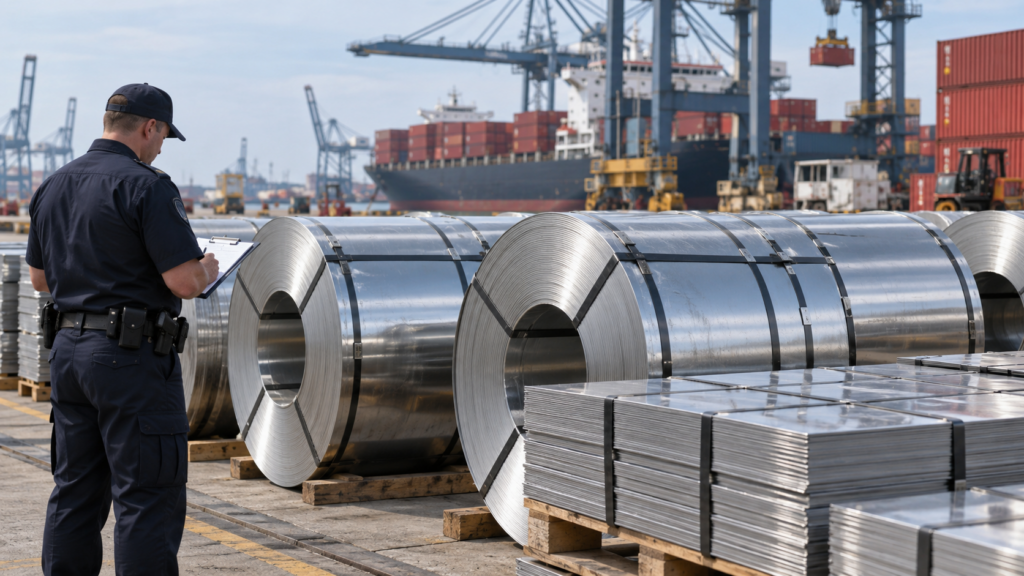
The U.S. Department of Commerce preliminarily determined on September 15, 2026, that Chinese producers and exporters of tin mill products are receiving countervailable subsidies, and set an initial subsidy rate of 66.61 percent. Tin mill products are thin, flat-rolled steel sheets coated with tin or chromium, most commonly used to make food cans, aerosol cans, and other metal packaging. What makes this determination worth a closer look is not the rate itself, but a second finding issued alongside it: critical circumstances. That finding gives Commerce the ability to apply duties retroactively, which changes what importers of these products need to check right now, not just what to plan for going forward.
What Commerce Determined
The countervailing duty investigation covers the period January 1 through December 31, 2025. Commerce preliminarily found that Shougang Holding Trade (Hong Kong) Ltd., Shougang Jingtang United Iron & Steel Co. Ltd., and all other Chinese exporters or producers not individually examined received countervailable subsidies at a rate of 66.61 percent. The investigation was brought by U.S. Steel and the United Steel, Paper and Forestry, Rubber, Manufacturing, Energy, Allied Industrial and Service Workers union, and it runs alongside a companion antidumping investigation on the same product, from the same alleged margins that ran as high as 1,077 percent in the original petition.
Why the Critical Circumstances Finding Matters More Than the Rate
Under ordinary circumstances, CVD cash deposit requirements apply only to entries made on or after the date Commerce publishes its preliminary determination. A critical circumstances finding changes that. It allows Commerce to instruct CBP to suspend liquidation, and ultimately assess duties, on entries made up to 90 days before the preliminary determination was published, if Commerce finds that imports surged in that window in anticipation of the case. That earlier window is precisely why this determination deserves attention beyond a routine AD/CVD notice.
Commerce’s preliminary critical circumstances finding applies to Shougang Holding, Shougang Jingtang, and all other exporters and producers not individually examined, meaning the retroactive exposure is not limited to the two named companies. Commerce also aligned the final CVD determination with the final determination in the companion antidumping investigation, so the two cases will move on the same schedule going forward.
What Importers Should Do Now
- Identify any entries of tin mill products from China made in the roughly 90 days before September 15, 2026, since those entries may fall within the retroactive window
- Confirm whether your supplier is Shougang Holding, Shougang Jingtang, or falls under the all-others rate, since the critical circumstances finding reaches all three categories
- Confirm the correct HTSUS classification for your products against the scope described in the investigation
- Budget for cash deposits at the 66.61 percent rate on shipments entered on or after September 15, 2026
- Watch for the final determination in both the CVD and companion antidumping investigations, since the final rates and the final critical circumstances finding could still change