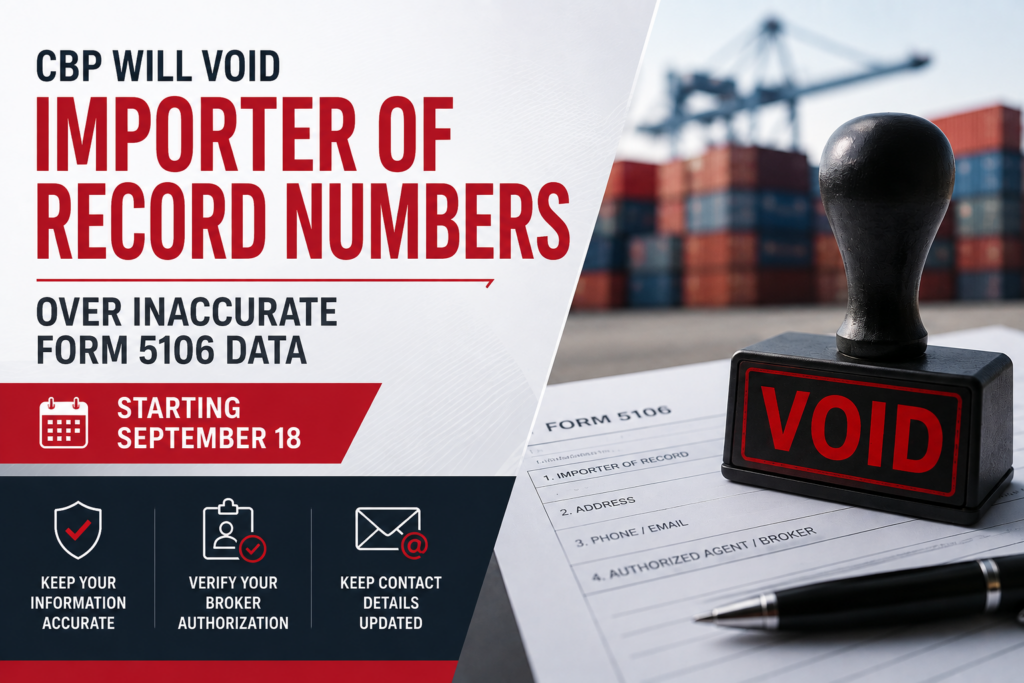
U.S. Customs and Border Protection has announced enhanced enforcement procedures to verify the accuracy of Importer of Record (IOR) information submitted on CBP Form 5106. Beginning September 18, 2026, CBP may immediately void an IOR number if it determines the information on file is inaccurate or incomplete. A voided IOR number becomes invalid for any purpose, including entering merchandise into the United States.
Background: Executive Order 14411
This enforcement step is one of the first concrete implementation actions under Executive Order 14411, “Strengthening Customs Enforcement,” which President Trump signed June 3, 2026. The Federal Register notice, published August 19, 2026, states that CBP is reviewing the Form 5106 information it currently has on file for both new and existing IORs, and that broader revisions to importer eligibility regulations and guidance are still under development.
What Form 5106 Requires
CBP Form 5106, the Create/Update Importer Identity Form, establishes an importer’s identity for customs purposes and requires the importer’s name, taxpayer identification number (EIN, SSN, or CBP-assigned number), mailing address, physical location address, phone number, and email address.
CBP’s notice sets out specific rules for what qualifies as valid contact information going forward:
- The physical address must be the actual business or individual location. It cannot be a customs broker’s address, a freight forwarder’s address, a registered agent’s address, a P.O. box, or a business service center. A principal’s home address is acceptable.
- The email address and phone number must belong directly to the IOR, not to a broker or other third party filing on the importer’s behalf.
- Customs brokers submitting Form 5106 information must have a valid Power of Attorney executed directly with the IOR, not routed through a freight forwarder or other intermediary.
What Happens If an IOR Number Is Voided
CBP will send written notice to the most recent email address on file explaining the basis for the action and how to request reestablishment of the number. CBP has not clarified whether an importer would need to obtain an entirely new IOR number or whether the existing number could be reinstated once corrected information is submitted. Either path is likely to cause delays in getting goods across the border, so prevention matters more than the cure here.
CBP also notes that intentional false statements or misleading information on Form 5106 can carry consequences beyond a voided number, including potential exposure under the False Claims Act given that IOR information identifies the party responsible for duties owed to CBP.
What Importers and Brokers Should Do Before September 18
- Review your current Form 5106 information on file, including your physical address, phone number, and email address, and confirm none of it points to a broker, freight forwarder, or third-party service address.
- Confirm your customs broker holds a valid, direct Power of Attorney with your company, not one executed through a freight forwarder or other intermediary.
- Submit corrections promptly if anything is outdated or inaccurate. This is worth doing well before the September 18 effective date rather than waiting for CBP’s own file review to catch it.
- If you use multiple brokers or have changed business addresses recently, check that all filings reflect your current, correct information consistently across brokers.
References
Federal Register: Accuracy of Importer of Record Data Submitted to CBP (2026-16911)
Executive Order 14411, Strengthening Customs Enforcement (White House)
Need Help Navigating This?
Alba is offering a CBP Form 5106 Accuracy Review for $100 per Importer of Record, checking your physical address, email, phone number, and broker Power of Attorney against CBP’s new requirements. Contact tradeservicesrequests@albawheelsup.com to get started.