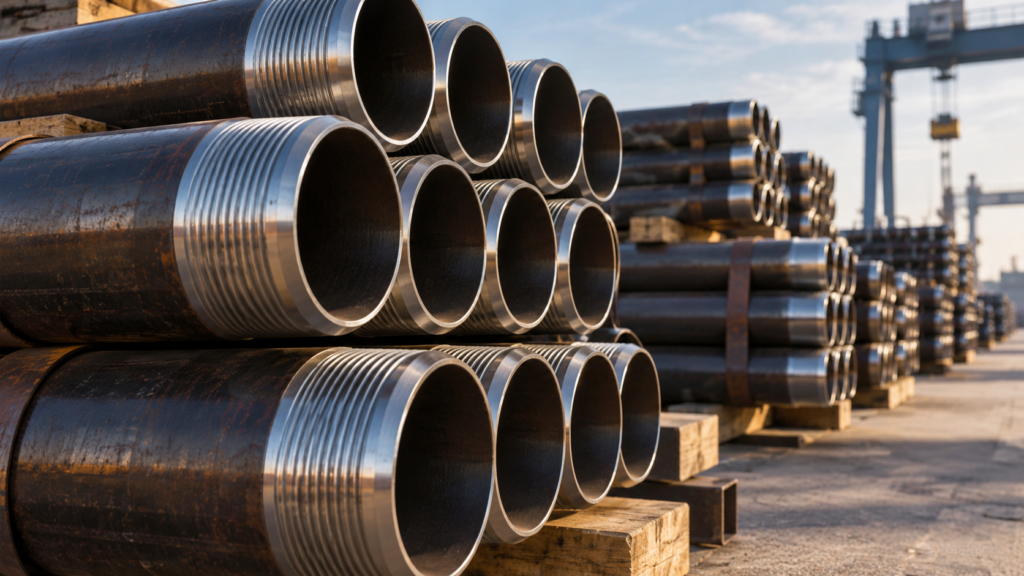
Imports of certain oil-country tubular goods from Austria are now subject to preliminary countervailing duty deposits following an affirmative determination by the U.S. Department of Commerce.
Effective September 3, 2026, U.S. Customs and Border Protection is suspending liquidation of covered entries and collecting cash deposits at a rate of 10.17% for voestalpine Tubulars GmbH & Co KG and all other Austrian producers and exporters.
The deposit is preliminary. Commerce will continue its investigation, and the final rate may increase, decrease or be eliminated depending on the final Commerce and U.S. International Trade Commission determinations.
Which Products Are Covered?
The investigation covers certain oil-country tubular goods, or OCTG, including specified casing and tubing of iron or steel. The scope reaches seamless and welded products, carbon and alloy steel, finished and unfinished goods, green tubes, limited-service products and coupling stock.
Coverage does not depend solely on whether a product meets an American Petroleum Institute specification. Both API and non-API merchandise can fall within the scope.
The scope also includes covered Austrian OCTG that undergoes certain finishing, packaging or processing in a third country. Heat treatment, cutting, upsetting, threading, coupling and similar operations generally do not remove Austrian merchandise from the investigation.
Importers must rely on the written scope, not the HTSUS classification alone, when determining whether a product is covered.
Immediate Commercial Impact
The 10.17% deposit increases cash requirements at entry and can materially affect the economics of existing orders. Because liquidation is suspended, the deposit is not necessarily the importer’s final liability.
If final assessment rates exceed the deposited amount, the importer of record may owe additional duties. If the final rate is lower, recovery generally depends on the liquidation and administrative-review process.
The case may therefore affect:
- Landed-cost calculations
- Customs-bond sufficiency
- Supplier and customer pricing
- Contract provisions allocating AD/CVD liability
- Sourcing decisions for future drilling programs
- Records connecting each entry to the correct producer and exporter
Producer and Exporter Identity Still Matters
Although the current preliminary rate is the same for the individually examined company and all others, importers should continue reporting producer and exporter information accurately. Rates may diverge later in the proceeding or in future administrative reviews.
Importers should also be cautious when purchasing through trading companies or sending Austrian goods to a third country for finishing. The supply chain must support both origin and scope determinations.
What OCTG Importers Should Do
Companies importing OCTG should:
- Compare merchandise specifications with the complete written scope.
- Identify Austrian-origin products processed or finished in third countries.
- Confirm producer and exporter combinations for each entry.
- Update landed costs and cash-flow forecasts for the 10.17% deposit.
- Review customs-bond capacity.
- Examine contracts for responsibility for AD/CVD deposits and later assessments.
- Monitor the companion antidumping investigation, which alleges Austrian dumping margins ranging from 43.64% to 55.16%, and final agency determinations in both proceedings.
Review Commerce’s preliminary determination.
Contact the Alba team for assistance reviewing OCTG scope, supplier combinations and the entry requirements created by the preliminary determination.
Subscribe to the ASK Alba™ Trade Brief for timely updates affecting steel, energy and industrial imports.
References
- U.S. Department of Commerce, Certain Oil Country Tubular Goods From Austria: Preliminary Affirmative Countervailing Duty Determination (C-433-815), Federal Register, September 3, 2026 — https://www.federalregister.gov/documents/2026/09/03/2026-18082/certain-oil-country-tubular-goods-from-austria-preliminary-affirmative-countervailing-duty
- U.S. Department of Commerce, Commerce Initiates Antidumping Duty and Countervailing Duty Investigations of Oil Country Tubular Goods from Austria, Taiwan, and the United Arab Emirates — https://www.trade.gov/commerce-initiates-antidumping-duty-and-countervailing-duty-investigations-oil-country-tubular