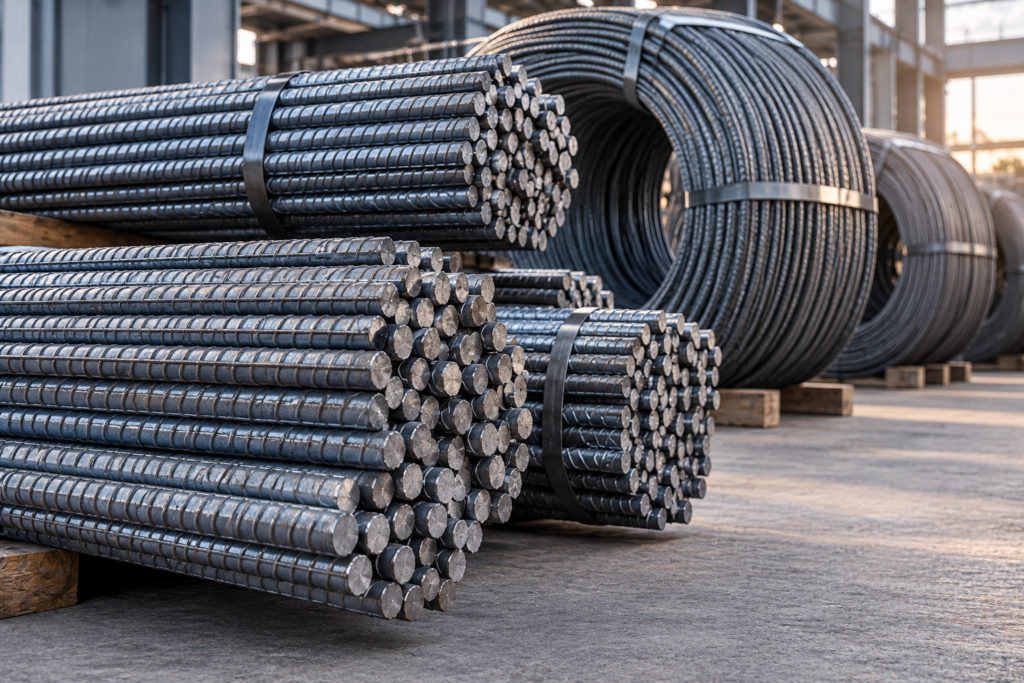
The Department of Commerce has issued new antidumping duty orders covering steel concrete reinforcing bar from Bulgaria, Egypt and Vietnam following affirmative final injury determinations by the U.S. International Trade Commission.
Commerce also issued countervailing duty orders covering rebar from Egypt and Vietnam. Under the orders, suspension of liquidation and cash-deposit requirements resumed on September 15, 2026, the date the ITC’s final injury determination was published in the Federal Register. The orders themselves were published September 18, 2026.
The new orders create significant landed-cost exposure, particularly for Vietnamese merchandise subject to combined antidumping and countervailing duty deposits.
Antidumping Cash-Deposit Rates
The new antidumping cash-deposit rates are:
Bulgaria
- Promet Steel JSC: 53.27%
- All other Bulgarian producers and exporters: 53.27%
Egypt
- Ezz Group (Al-Ezz Dekheila Steel Alexandria, Ezz Steel, Ezz Rolling Mills, Al-Ezz Flat Steel): 34.20%
- El Marakby Steel: 52.73%
- Suez Steel Company: 52.73%
- All other Egyptian producers and exporters: 34.20%
Commerce based the 52.73% rates on facts available with adverse inferences.
Vietnam
- Specified Hoa Phat producer-exporter combinations: 123.49%
- Vietnam-wide entity: 131.53%
These are the applicable cash-deposit rates after adjustment for subsidy offsets. The corresponding weighted-average dumping margins are 128.53% and 136.57%.
Separate Countervailing Duty Rates Apply
Rebar from Egypt and Vietnam is also covered by new countervailing duty orders.
The applicable subsidy rates are:
- Egypt: 23.27%
- Vietnam: 6.80%
Importers of Egyptian and Vietnamese merchandise may therefore face both antidumping and countervailing duty deposits. The rates must be reported separately and should not be treated as a single tariff.
Which Rebar Is Covered?
The orders cover steel concrete reinforcing bar imported in straight lengths or coils, regardless of metallurgy, length, diameter or grade.
The scope also includes covered rebar that undergoes additional processing in the subject country or a third country, including:
- Cutting
- Grinding
- Galvanizing
- Painting
- Coating
- Other processing that would not remove the merchandise from scope if performed in the country of manufacture
Plain rounds, meaning nondeformed or smooth rebar, are specifically excluded.
Covered merchandise is primarily classified under HTSUS 7213.10.0000, 7214.20.0000 and 7228.30.8010, although additional classifications are listed in the orders. The written description controls if the tariff classification and scope language appear to conflict.
Importers Must Account for Provisional-Measures Gaps
The timing of the orders creates several periods that require careful entry review.
For the antidumping proceedings, the extended provisional-measures period expired on September 8. Entries made from September 9 through September 14, the day before the ITC’s final injury determination was published on September 15, are generally to be liquidated without antidumping duties.
For the countervailing duty proceedings, provisional measures expired earlier. Commerce states that entries made from May 13 through September 14, the day before publication of the ITC’s final determinations, are generally to be liquidated without countervailing duties.
Suspension of liquidation and collection of the applicable deposits resumed on September 15, 2026, the date the ITC’s final injury determination was published in the Federal Register.
Importers should confirm the precise entry date and applicable Commerce instructions before determining whether an entry falls within one of these gaps.
Why Producer and Exporter Identification Matters
The correct antidumping rate may depend on both the producer and exporter shown on the entry.
This is especially important for Vietnamese rebar, where the lower company-specific rate is limited to identified Hoa Phat producer-exporter combinations. Merchandise involving a different supplier combination may be subject to the Vietnam-wide rate.
Importers should maintain documentation connecting each shipment to the named producer and exporter rather than relying solely on a supplier’s invoice or commercial brand.
What Rebar Importers Should Do
Importers should:
- Identify all entries of potentially covered rebar from Bulgaria, Egypt and Vietnam.
- Confirm the actual producer and exporter.
- Determine whether the merchandise falls within the written scope.
- Verify the applicable AD and CVD case numbers and deposit rates.
- Review entries made during the provisional-measures gaps.
- Calculate combined duty exposure and check bond sufficiency.
- Review contracts addressing responsibility for retrospective duties.
- Monitor CBP and Commerce instructions before liquidation.
References
- Steel Concrete Reinforcing Bar From Bulgaria, Egypt, and the Socialist Republic of Vietnam: Antidumping Duty Orders (91 FR 59104, Sept. 18, 2026)
- Steel Concrete Reinforcing Bar From the Socialist Republic of Vietnam and Egypt: Countervailing Duty Orders (91 FR 59102, Sept. 18, 2026)
- Steel Concrete Reinforcing Bar From Bulgaria, Egypt, and Vietnam; Determinations, ITC final injury notice (91 FR 58469, Sept. 15, 2026)
- USITC News Release: Steel Concrete Reinforcing Bar from Bulgaria, Egypt, and Vietnam Injures U.S. Industry
- ACCESS: Case Nos. A-487-002 (Bulgaria), A-729-805/C-729-806 (Vietnam), A-552-853/C-552-854 (Egypt)
Contact the Alba team for assistance reviewing product scope, producer-exporter combinations, deposit rates and affected entries.
Subscribe to the ASK Alba™ Trade Brief for timely updates on trade remedies, tariffs and U.S. import requirements. Contact Alba