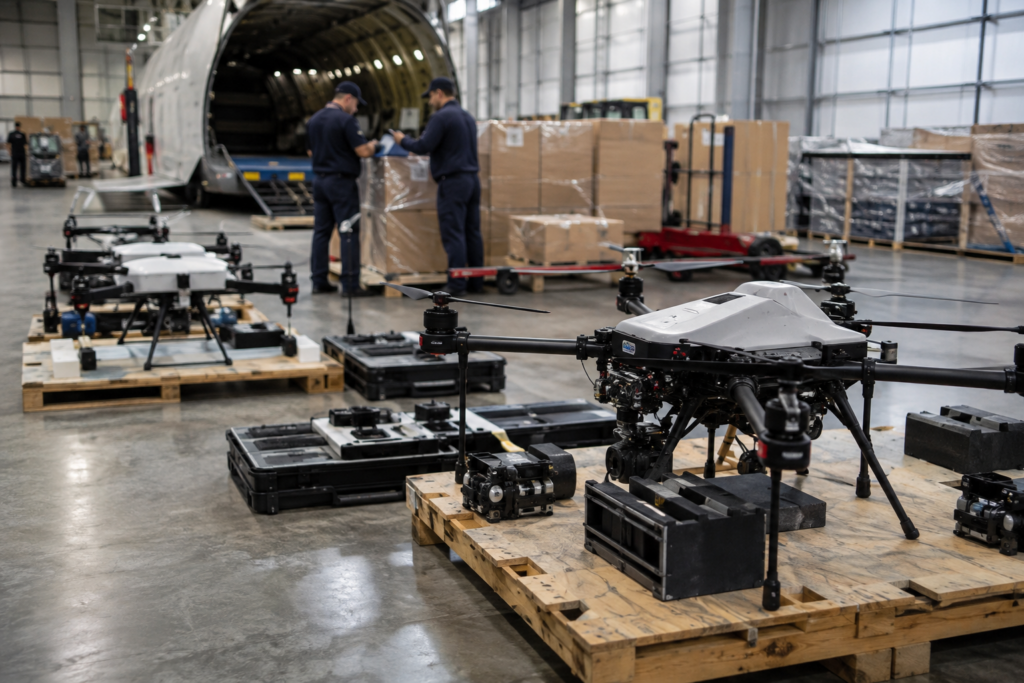
Importers of drones and drone components face a new round of Section 232 tariffs beginning September 3, 2026. The action introduces rates ranging from 25% to 100%, with the highest duties targeting larger drones, thermal-imaging systems, docking stations, and designated critical components.
The measure also creates additional certification and supply-chain requirements for products seeking preferential treatment based on allied-country origin. Importers should begin reviewing product specifications, sourcing records, and planned entry dates now.
New Tariff Structure
The August 13 presidential proclamation establishes several tariff categories:
- A 100% Section 232 tariff on drones with a maximum takeoff weight of more than 25 kilograms, drones that integrate thermal imagers, docking stations, and certain critical components listed in the proclamation annexes.
- A 25% tariff on covered drones weighing 25 kilograms or less.
- A 25% tariff on designated drone components beginning February 9, 2027, giving importers and manufacturers additional time to adjust sourcing.
The tariffs on drones and the most sensitive components apply to goods entered for consumption, or withdrawn from warehouse for consumption, on or after 12:01 a.m. Eastern Time on September 3, 2026. They apply in addition to other duties, taxes, fees, and charges unless the proclamation provides otherwise.
Reduced Rates Require More Than Country of Shipment
Products of the European Union, Japan, Liechtenstein, South Korea, Switzerland, and Taiwan may qualify for a combined duty rate of no more than 15%. Products of the United Kingdom may qualify for a rate of no more than 10%.
However, those rates are not available simply because a drone is shipped from an eligible country. Importers must certify that substantially all critical components and technology originate in the United States or one of the designated partner economies. The Commerce Department will establish a process for determining which products satisfy those requirements and will communicate eligible products to U.S. Customs and Border Protection.
What Importers Should Review
- Confirm the HTS classification and annex coverage for each drone and component.
- Review maximum takeoff weight, thermal-imaging capabilities, and whether the product includes a covered docking station or critical component.
- Map the origin of critical hardware, software, and technology rather than relying only on the final assembly country.
- Evaluate whether shipments can be entered before September 3 without creating operational or compliance risk.
- Update landed-cost models and pricing for affected products.
Commerce is also authorized to add more components to the tariff scope if increased imports threaten to undermine the measure. Importers should treat the current annexes as a starting point and monitor future Federal Register and CBP guidance.
ASK Alba™
Contact Alba’s trade experts to review product classifications, origin documentation, tariff exposure, and entry timing before the new duties take effect.
Source: White House proclamation on unmanned aircraft systems