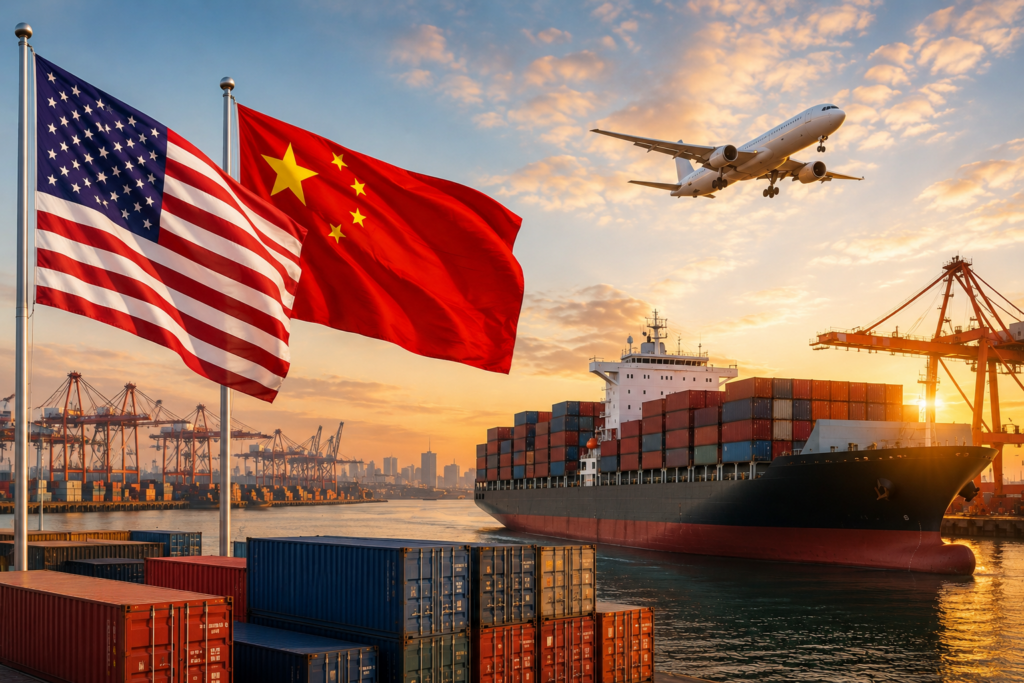
The May 2026 summit between President Trump and President Xi Jinping produced several developments that could impact sourcing strategies, tariff planning, agricultural trade, and global supply chain operations for U.S. importers and exporters.
While many details remain subject to implementation, the discussions signal a temporary easing of trade tensions between the United States and China and may provide short-term stability for companies managing China-linked supply chains.
Tariff Truce Extension Provides Temporary Stability
One of the most significant developments for importers is the continued suspension of heightened reciprocal tariffs on Chinese imports through November 10, 2026. The current 10% reciprocal tariff rate remains in effect during the suspension period.
For companies that delayed or restructured sourcing activity due to tariff uncertainty, the extension may provide additional time to evaluate sourcing strategies, inventory planning, and supplier relationships heading into 2027.
Importers should continue monitoring developments closely, as long-term U.S.-China trade policy uncertainty remains unresolved.
Section 301 Exclusions Extended
Certain Section 301 tariff exclusions previously scheduled to expire in November 2025 have been extended through November 2026.
The extension may provide temporary cost relief for importers relying on products currently covered under existing exclusion programs. Companies should review product classifications and exclusion applicability to determine whether opportunities remain available.
China also announced plans to continue its market-based tariff exclusion process for U.S. imports through the end of 2026.
Rare Earth Supply Chains Remain in Focus
Rare earth materials were another major topic discussed during the summit, particularly amid ongoing supply chain concerns impacting semiconductor, electronics, EV, aerospace, and defense industries.
Reports surrounding the summit indicate both countries discussed stabilizing access to critical minerals and reducing supply chain disruptions involving key rare earth materials.
These materials remain essential to advanced manufacturing and technology production, and supply disruptions have created challenges across multiple industries over the past several years. Companies operating in trade-sensitive sectors should continue monitoring export control developments and supplier availability in the coming months.
Agricultural Trade Commitments Could Impact Global Logistics
The summit also included multiple agricultural trade commitments that could influence export demand, refrigerated transportation activity, and global food supply chains.
China agreed to restore market access for U.S. beef and resume poultry imports from bird-flu-free states while also signaling increased purchases of U.S. agricultural goods, including soybeans. Additional discussions focused on reducing certain trade barriers and expanding agricultural trade cooperation between the two countries.
For meat exporters, refrigerated cargo providers, agricultural suppliers, and cold chain logistics organizations, these developments may influence:
- Export volumes
- Reefer container demand
- Port activity
- Customs clearance operations
- International transportation planning
Alba recently published a separate article covering the agricultural and perishables implications in more detail:
China Restores U.S. Beef and Poultry Access Following Trump-Xi Summit
Commercial Trade and Boeing Agreement Signal Easing Tensions
China also agreed to a major Boeing aircraft purchase as part of broader efforts to stabilize commercial trade relations between the two countries.
While many summit agreements remain preliminary, the announcements may signal efforts by both governments to reduce immediate trade pressures and support key industrial sectors tied to global supply chains.
What Importers Should Evaluate Now
As trade policies continue evolving, importers should consider:
- Reviewing sourcing strategies tied to China-origin goods
- Evaluating Section 301 exclusion opportunities
- Monitoring rare earth supply chain developments
- Assessing supplier continuity and inventory planning
- Preparing for potential policy shifts ahead of the November 2026 tariff suspension deadline
Although the summit reduced some immediate trade pressures, long-term trade policy uncertainty between the United States and China remains elevated.
For companies managing complex global supply chains, continued monitoring and proactive compliance planning remain essential.
Contact Us:
Alba Wheels Up International Contact Page
Give me the actual source links
Sources
- Associated Press – China agrees to boost trade for U.S. beef and poultry following Trump-Xi summit
- Reuters – U.S. expects agriculture deal worth ‘double-digit billions’ after Trump-Xi summit
- Reuters – Xi-Trump summit may yield farm deal, but China has limited soybean appetite
- Financial Times – China agrees to Boeing order during Trump-Xi summit discussions