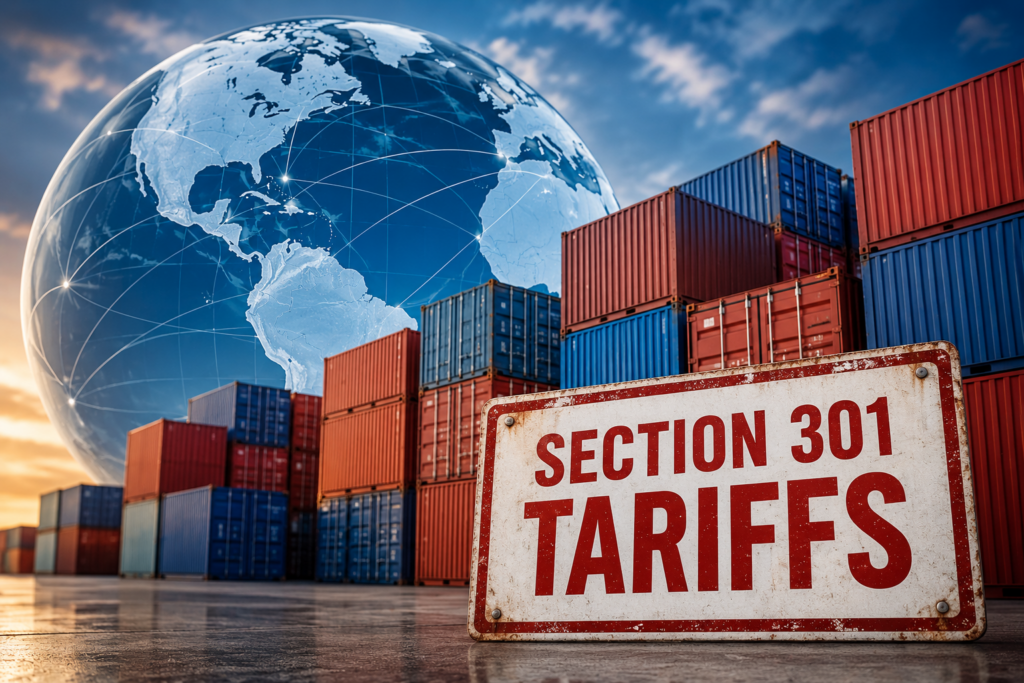
The Office of the United States Trade Representative (USTR) has proposed new Section 301 tariff actions affecting imports from 60 economies as part of its ongoing investigations into forced labor practices. The proposal establishes a two-tier tariff structure and could significantly impact sourcing strategies for importers if finalized.
Under the proposal, imports from economies that have implemented or committed to forced labor import prohibitions would be subject to an additional 10 percent duty. Economies that have not adopted comparable measures would face a proposed 12.5 percent tariff.
Countries falling into the 12.5 percent category include China, Vietnam, India, Japan, South Korea, Brazil, Bangladesh, Cambodia, and Thailand. The lower 10 percent rate would apply to economies including Canada, Mexico, members of the European Union, Ecuador, Indonesia, and Pakistan.
Proposed Exclusions
USTR’s proposal includes several notable exclusions. Among the products excluded from the additional tariffs are:
- USMCA-qualifying goods from Canada and Mexico.
- Certain CAFTA-DR apparel products.
- Many agricultural commodities and tropical fruits.
- Oil and gas products.
- Numerous chemicals and raw minerals.
- Pharmaceutical products.
- Aviation products.
- Goods already subject to Section 232 tariffs.
In addition, USTR has proposed a textile preference mechanism that would allow qualifying apparel imports from certain countries to receive reduced tariff treatment based on the use of U.S. textile inputs.
Potential Impact on Importers
If implemented, the new tariffs would be layered on top of existing duties and could affect a wide range of industries, including apparel, retail, manufacturing, electronics, and consumer products.
Importers should begin reviewing their sourcing exposure and identifying products that may fall outside the proposed exclusions. Companies with supply chains involving China, Southeast Asia, India, and other affected markets may wish to model the potential impact on landed costs and evaluate alternative sourcing options.
Comments on the proposed action are due July 6, 2026, and a public hearing is scheduled for July 7, 2026.
Ask Alba™
Understanding how evolving trade actions affect your supply chain can be challenging. Alba’s licensed customs brokers and trade specialists help importers evaluate tariff exposure, identify opportunities for mitigation, and navigate changing regulatory requirements.
Answers. Solutions. Knowledge.
Contact us to learn how Alba can help your business prepare for changing trade requirements.
Sources
U.S. Trade Representative – USTR Makes Findings and Proposes Action in 60 Section 301 Investigations Relating to Failures to Take Action on Forced Labor
https://ustr.gov/about/policy-offices/press-office/press-releases/2026/june/ustr-makes-findings-and-proposes-action-60-section-301-investigations-relating-failures-take-action
Federal Register – Notice of Determinations and Proposed Action in the Section 301 Forced Labor Investigations
https://www.federalregister.gov/documents/2026/06/05/2026-11296/notice-of-determinations-and-proposed-action-in-the-section-301-investigations-of-acts-policies-and
Docket USTR-2026-0265 (Written Comments)
https://comments.ustr.gov/s/docket?docketNumber=USTR-2026-0265
Docket USTR-2026-0266 (Public Hearing Requests)
https://comments.ustr.gov/s/docket?docketNumber=USTR-2026-0266