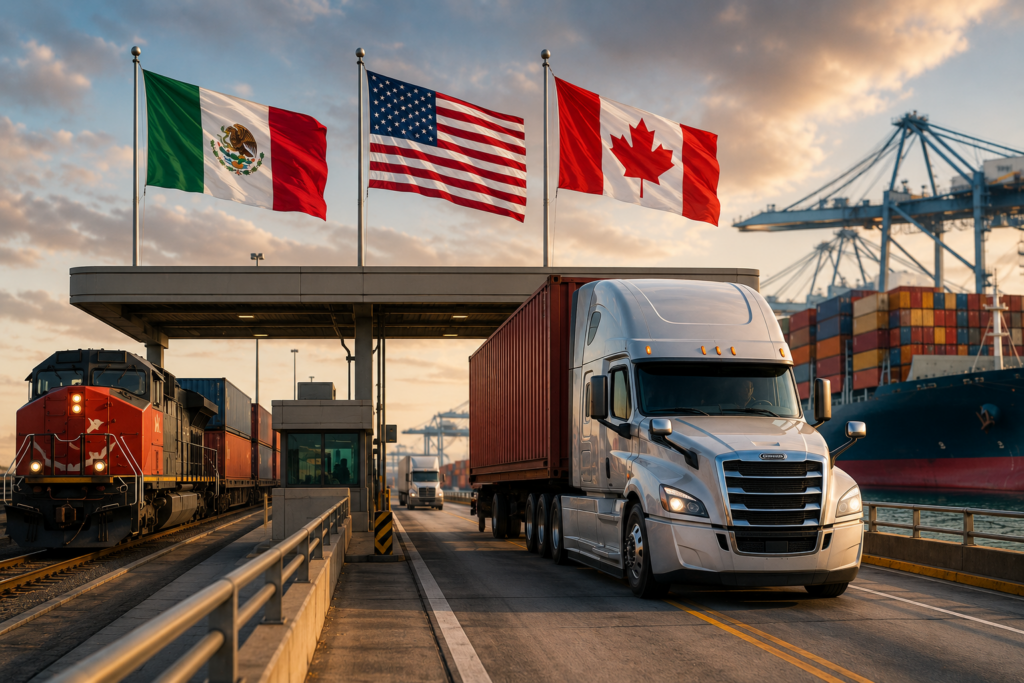
The United States has announced that it will not renew the United States-Mexico-Canada Agreement (USMCA) in its current form during the agreement’s first Joint Review, signaling the start of what could become several years of negotiations over the future of North American trade.
While the announcement has generated headlines, it does not mean USMCA is ending or that duty-free trade is disappearing. The agreement remains fully in effect, and businesses should continue operating under current USMCA rules while Canada, Mexico, and the United States begin discussions on potential updates.
What Happened?
On July 1, 2026, U.S. Trade Representative Jamieson Greer announced that the United States would not agree to extend USMCA without changes during the agreement’s first Joint Review.
According to Ambassador Greer, the Administration believes the agreement has not fully delivered on several key commitments, particularly regarding market access, labor obligations, and North American manufacturing competitiveness. Rather than extending the agreement as written, the United States is seeking an opportunity to modernize and strengthen its provisions through additional negotiations.
What Is the USMCA Joint Review?
USMCA includes a unique “sunset” mechanism that requires the three countries to review the agreement every six years.
During each Joint Review, the United States, Canada, and Mexico decide whether to extend the agreement for another 16 years.
If all three countries agree, the 16-year term resets.
If one or more countries decline to renew—as the United States has now done—the agreement does not expire immediately. Instead, it remains in force while annual reviews and negotiations continue until the next sunset deadline.
Does This Mean USMCA Is Ending?
No.
USMCA remains the governing free trade agreement between the United States, Canada, and Mexico.
Importers and exporters should continue using USMCA preferences where they qualify, including claiming duty-free treatment, complying with rules of origin, and maintaining required certification records.
There are no immediate changes to customs procedures, tariff treatment, or eligibility requirements as a result of this announcement.
Why Did the United States Decline Renewal?
The Administration stated that it wants to negotiate improvements before committing to another 16-year extension.
Areas expected to receive increased attention include:
- Rules of origin for manufactured goods
- Automotive production requirements
- Labor and environmental commitments
- Market access for certain industries
- Strengthening North American supply chains
- Addressing perceived trade imbalances
Additional negotiating priorities are expected to emerge as discussions continue with Canada and Mexico.
What Should Importers Do Now?
Although no immediate compliance changes are required, companies should begin preparing for potential updates over the next several years.
Importers should:
- Continue using USMCA where products qualify.
- Monitor future Joint Review negotiations and policy announcements.
- Review sourcing strategies for products heavily dependent on North American content requirements.
- Stay informed about potential changes to rules of origin, automotive provisions, and other sector-specific requirements.
- Work with customs and trade compliance professionals to evaluate how future agreement revisions could affect supply chains.
Frequently Asked Questions
Are USMCA duty-free benefits ending?
No. USMCA remains fully in force, and eligible products may continue receiving preferential tariff treatment.
Do importers need to change how they file entries today?
No. There are no immediate changes to customs procedures or USMCA eligibility requirements.
What happens next?
The three countries will continue discussions through the Joint Review process. If an agreement to renew is not reached immediately, annual reviews will continue while negotiations move forward.
Should businesses be concerned?
There is no need for immediate operational changes. However, companies that rely heavily on North American manufacturing or cross-border supply chains should closely monitor negotiations, as future revisions could affect sourcing strategies, rules of origin, and compliance requirements.
Why This Matters
USMCA supports hundreds of billions of dollars in annual trade across North America and serves as the foundation for countless integrated supply chains. While the agreement remains in effect, the United States’ decision not to renew it in its current form marks the beginning of an important new phase of negotiations that could shape regional trade policy for years to come.
For importers and exporters, staying informed now will help avoid surprises as discussions evolve.
ASK Alba™
Answers • Solutions • Knowledge
Trade agreements continue to evolve, and even announcements that don’t create immediate compliance changes can have significant long-term implications for sourcing, customs planning, and supply chain strategy. Alba’s trade experts help businesses understand evolving trade policies, evaluate compliance risks, and prepare for changes before they take effect.