What Importers Need to Know and Act On
The U.S. Food and Drug Administration has just released its 2026 deliverables for the Human Foods Program (HFP)— a strategic roadmap for where FDA’s regulatory focus will land this year. These priority items are more than check-the-box initiatives; they’re a signal of how food safety, nutrition policy, and chemical oversight are evolving — and what that means for companies importing food and beverage products into the U.S. market.
What’s New in 2026 — Big Themes for Importers
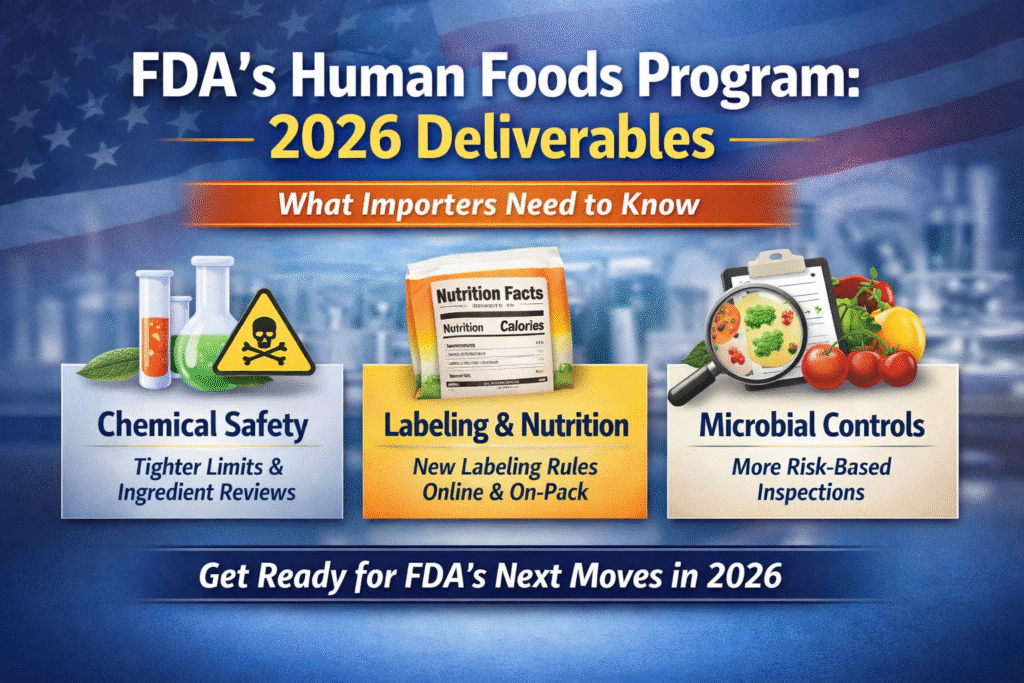
In 2026, FDA is building on momentum from 2025 by sharpening its focus across three central pillars of food regulation: food chemical safety, nutrition and labeling, and microbiological safety — all of which directly intersect with importer responsibilities.
1. Food Chemical Safety Gets More Scrutiny
FDA plans to review and potentially ban unsafe ingredients, tighten oversight of additives, and issue new guidance related to chemical hazards. Most notable for importers:
- Setting action levels for heavy metals like cadmium and inorganic arsenic in baby and young children’s foods, which could shift acceptable compliance limits for ingredients sourced globally.
- Issuing guidance on preventive controls for chemical hazards — reinforcing expectations around supplier verification and risk management throughout the supply chain.
For importers, this means proactively verifying global suppliers are meeting evolving expectations on chemical contaminants and documenting compliance in ways that align with FDA’s risk-based oversight.
2. Labeling and Nutrition Policies Are Moving Ahead
FDA’s agenda includes guidance on online food labeling, front-of-package nutrition information, and expanded transparency on product nutrition. These efforts support public health but also raise the bar for importers selling in digital and brick-and-mortar channels: labels must be not only compliant on pack, but also in digital retail environments where incomplete or inconsistent nutrition info can trigger compliance actions.
3. Microbiological Safety and Inspection Integration
FDA continues to build preventive frameworks for foodborne illness, relying more on risk-based inspections and collaboration with state partners. For importers, this underscores the importance of robust supplier audits and preventive control plans that align with FDA expectations — particularly for high-risk products.
Why This Matters for Importers
While the HFP deliverables aren’t new regulations on their own, they forecast where enforcement, guidance, and compliance activity is likely headed. FDA’s priority agenda lays out where resources and oversight will land in the coming year — and importers are on the front lines of meeting those expectations:
- Ingredient risk profiling: Preparations now can prevent compliance slowdowns later — especially for products containing additives or contaminants under review.
- Supplier transparency: As FDA moves toward more systematic review and oversight, documentation of safety data and risk assessments from foreign suppliers will be under closer scrutiny.
- Digital label compliance: With guidance coming on online labeling, importers should audit e-commerce listings to ensure nutrition facts, ingredient lists, and allergen info reflect what’s on the physical label and meet FDA expectations.
In short: these deliverables give importers a “heads-up” on where FDA’s attention will be strongest in 2026. Early alignment with these priorities means fewer surprises, more confident compliance, and stronger positioning as regulatory expectations continue to evolve.
What to Do Next
Here are a few steps food and beverage importers should consider now:
- Review current supplier documentation for chemical safety, preventive controls, and contaminant monitoring.
- Audit product labels — online and offline — for compliance with current FDA requirements and expected changes.
- Update risk assessments and compliance programs to reflect anticipated shifts in FDA oversight (especially related to chemical hazards and nutrition labeling).
Watching these developments closely will help your business stay compliant, competitive, and prepared for what’s coming next from FDA.nts and assess how emerging standards may affect importer compliance and trade operations.
Speak to an Alba Expert for Support
If you have questions, please reach out, contact us.
Reference: https://www.fda.gov/food/hfp-constituent-updates/fda-releases-2026-deliverables-human-foods-program?utm_medium=email&utm_source=govdelivery